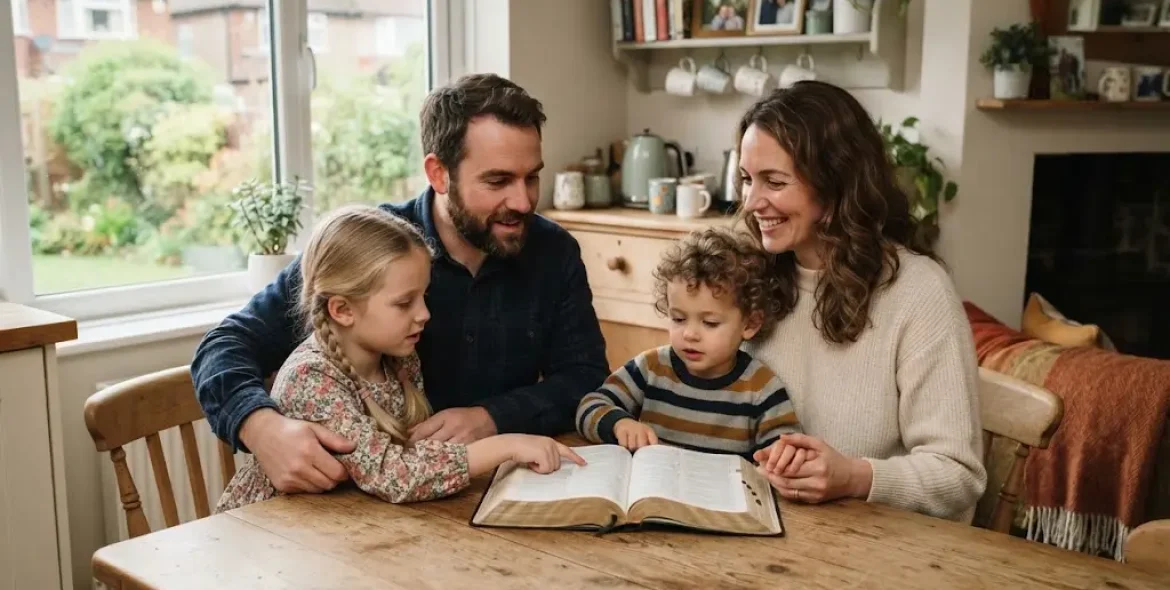
Christian parenting is about more than teaching children Bible stories or taking them to church. It is the lifelong responsibility of helping children understand faith, develop character, experience love, and learn how to make wise choices. For Christians, parenting is an opportunity to reflect God’s character through everyday words, decisions, discipline, forgiveness, and relationships.
Becoming a parent can bring enormous joy, but it can also raise difficult questions. How should parents discipline their children? How can faith become part of ordinary family life? What should parents do when disagreements become intense? And how can mothers and fathers provide support for parents while maintaining a healthy home?
The Bible does not provide a modern parenting manual covering every situation. However, it gives principles that can guide parents through different stages of family life. These principles emphasise love, instruction, consistency, patience, responsibility, and a relationship with God.
What Does Christian Parenting Mean?
Christian parenting means raising children within the values and teachings of the Christian faith while recognising that children are individuals who need patience, guidance, and respect. Parents are not simply trying to produce obedient children. They are helping young people develop wisdom, character, compassion, responsibility, and a personal understanding of faith.
Deuteronomy 6:6-7 presents an important picture of family discipleship. God’s commands are described as something parents should carry in their own hearts and discuss with their children during ordinary moments at home, while travelling, at bedtime, and when getting up. This suggests that faith formation is not limited to formal lessons. It can become part of everyday family conversations and routines.
That principle remains valuable today. A child may learn about kindness when a parent responds calmly to a difficult situation. They may learn about forgiveness when a parent admits a mistake. They may learn about prayer when they see their parents turning to God during uncertainty.
Christian Parenting Begins With the Example of Parents
Children often learn as much from what parents do as from what they say. For this reason, Christian parenting begins with the character and example of the adults in the home.
Parents will not always get everything right. They may become frustrated, make poor decisions, or respond too strongly. A healthy Christian home does not require perfect parents. Instead, children can benefit from seeing adults acknowledge mistakes, apologise sincerely, seek forgiveness, and try again.
This is particularly important when parents disagree. If parental arguments happen in front of children, the way those disagreements are handled can teach powerful lessons about communication and respect.
A child who regularly sees shouting, insults, threats, or contempt may begin to associate disagreement with hostility. On the other hand, parents who learn to listen, apologise, compromise, and resolve conflict demonstrate that disagreement does not have to destroy a relationship.
How Should Christian Parents Discipline Children?
Discipline is an important part of raising children, but biblical discipline should not be confused with uncontrolled anger or harsh treatment. The purpose of discipline is to teach, correct, guide, and help children understand consequences.
Ephesians 6:4 warns fathers not to exasperate their children and instead calls them to bring their children up in the training and instruction of the Lord. The passage therefore places responsibility on parents while also recognising the potential harm caused when children are continually provoked or discouraged.
Effective discipline can include clear boundaries, appropriate consequences, consistent expectations, honest conversations, and opportunities to repair mistakes. Parents should explain what went wrong and, when appropriate, help children understand why a particular behaviour was harmful.
Discipline also needs to be age-appropriate. A young child may need simple instructions and immediate consequences, while an older child may benefit more from discussion and increasing responsibility.
Discipline Should Not Become Humiliation
There is a significant difference between correcting behaviour and attacking a child’s identity. Saying that a particular action was wrong is different from telling a child that they are worthless, stupid, or unwanted.
Christian parents can maintain firm boundaries while communicating unconditional love. Children need to understand that poor behaviour has consequences without believing that parental love disappears whenever they make a mistake.
Building Faith Into Everyday Family Life
Christian parenting becomes more practical when faith is connected to ordinary experiences. Parents do not need to turn every family conversation into a formal Bible lesson.
Simple habits can create opportunities for spiritual growth. Families might pray together before important events, discuss a Bible passage at an appropriate age level, talk about gratitude around the dinner table, or discuss how Christian values apply to situations children encounter at school and online.
Parents can also encourage children to ask difficult questions. Questions about God, suffering, prayer, friendship, relationships, morality, and doubt do not necessarily represent rejection of faith. Sometimes they show that a child is thinking seriously about what they believe.
Instead of immediately dismissing difficult questions, parents can listen carefully and explore them together. When parents do not know an answer, saying so can be healthier than pretending to know everything.
Christian Parenting and Parental Arguments
Arguments between parents are not unusual. Two adults can love each other deeply and still disagree about money, work, household responsibilities, discipline, family expectations, or other pressures.
The problem is not simply that parents disagree. The greater concern is how disagreements are expressed and how children experience them.
When conflict begins, parents should consider whether the conversation is appropriate for children to hear. If emotions are escalating, taking a break and returning to the issue later can be wiser than continuing an argument in front of the family.
Parents can also demonstrate healthy conflict resolution by showing children that disagreements can end with reconciliation. Saying “I was wrong,” “I am sorry,” or “Let’s find a better way to handle this” can teach children that humility is part of strong relationships.
This principle becomes especially important when considering the wider biblical picture of marriage and family. For further reading, see our guide to what the Bible teaches about husbands loving their wives.
Supporting Children When Family Relationships Are Difficult
Some families face circumstances that are more complicated than ordinary disagreements. Separation, divorce, blended families, bereavement, financial pressure, or long-running conflict can affect both parents and children.
Parenting separation can require particular care because children may feel caught between adults they love. Parents should avoid making children messengers, asking them to take sides, or using them to communicate hostility toward the other parent.
Where it is safe and appropriate, children generally benefit from reassurance that adult problems are not their responsibility. They need age-appropriate explanations, emotional security, predictable routines, and opportunities to talk about how they are feeling.
Parents experiencing difficult family circumstances may also need support for parents from trusted people in their community. A mature Christian friend, church leader, counsellor, family support service, or other appropriate professional can provide perspective when a situation becomes difficult to manage alone.
Becoming a Parent: Preparing for the Responsibility
Becoming a parent often changes how people think about time, priorities, relationships, and responsibility. Couples may spend months preparing practically for a child while giving less attention to the emotional and spiritual changes that parenthood can bring.
Before becoming parents, couples can talk honestly about expectations. How will responsibilities be shared? How will discipline be approached? What role will faith have in family life? How will disagreements be handled? What support will be available when both parents are exhausted?
These conversations do not guarantee that parenting will be easy. They can, however, help couples recognise differences before those differences become major sources of conflict.
People who hope to be parents may also benefit from understanding that there is no single perfect parenting style. Children have different personalities, strengths, needs, and challenges. Biblical principles can provide a foundation, while wisdom and flexibility help parents apply those principles to real situations.
Christian Parenting Requires Love and Boundaries
One of the challenges of parenting is balancing affection with authority. Children need to know that they are loved, but they also need boundaries that help them understand responsibility.
Love without boundaries can leave children without sufficient guidance. Boundaries without warmth can make children feel controlled rather than cared for. Healthy parenting aims to combine both.
This balance can be seen in everyday situations. A parent may refuse to allow inappropriate behaviour while remaining calm and affectionate. They may enforce a consequence while still listening to the child’s explanation. They may say no to something while making it clear that the relationship remains secure.
Such consistency can help children develop self-control rather than simply learning to avoid punishment.
Teaching Children About Forgiveness
Forgiveness is particularly important in Christian family life because parents and children will inevitably hurt one another at times. A parent may speak harshly. A child may lie or disobey. Siblings may fight. No family avoids every mistake.
Christian parenting can use these moments as opportunities to teach responsibility and restoration. Forgiveness does not mean pretending that harmful behaviour never happened. Instead, it can involve recognising the wrong, taking responsibility, making amends where possible, and working toward restored trust.
Parents can model this process by apologising when they have acted wrongly. A child who hears a parent sincerely apologise learns that authority does not require pretending to be perfect.
Helping Children Develop Their Own Faith
Parents can teach children about Christianity, encourage church involvement, pray with them, and answer their questions. However, Christian faith ultimately involves a person’s own response to God.
As children grow older, they may begin to examine beliefs they once accepted because their parents taught them. This can be a significant stage of spiritual development. Parents can continue providing guidance without trying to control every thought or question.
A strong family environment can give children a secure foundation from which they can explore faith honestly. Listening matters. Patience matters. So does allowing children to understand that asking questions does not make them unwelcome in the family.
Christian Parenting Is a Long-Term Calling
Christian parenting is not about producing a perfect family. It is about faithfully caring for children while pointing them toward truth, wisdom, love, responsibility, and a relationship with God.
Parents will face different challenges at different stages. The needs of a toddler are not the needs of a teenager, and the questions of an adult child may be very different from those of a young child. Yet the underlying principles of patient love, wise boundaries, instruction, humility, forgiveness, and faithful example remain valuable.
For Christian families, parenting can therefore become part of everyday discipleship. The ordinary moments matter: listening after a difficult day, praying together, correcting behaviour, apologising after an argument, celebrating a child’s achievement, and offering reassurance when life feels uncertain.
The Bible’s picture of family life points parents toward active involvement rather than passive instruction. Deuteronomy 6:6-7 connects teaching children with ordinary routines, while Ephesians 6:4 emphasises raising children through appropriate training and instruction rather than provoking them. These passages can be read together as a helpful biblical foundation for family discipleship.
Ultimately, Christian parenting is a journey. Parents learn as they go, children grow and change, and family circumstances develop over time. The goal is not perfection but faithful, loving, wise care that helps children encounter Christian faith through both teaching and example.