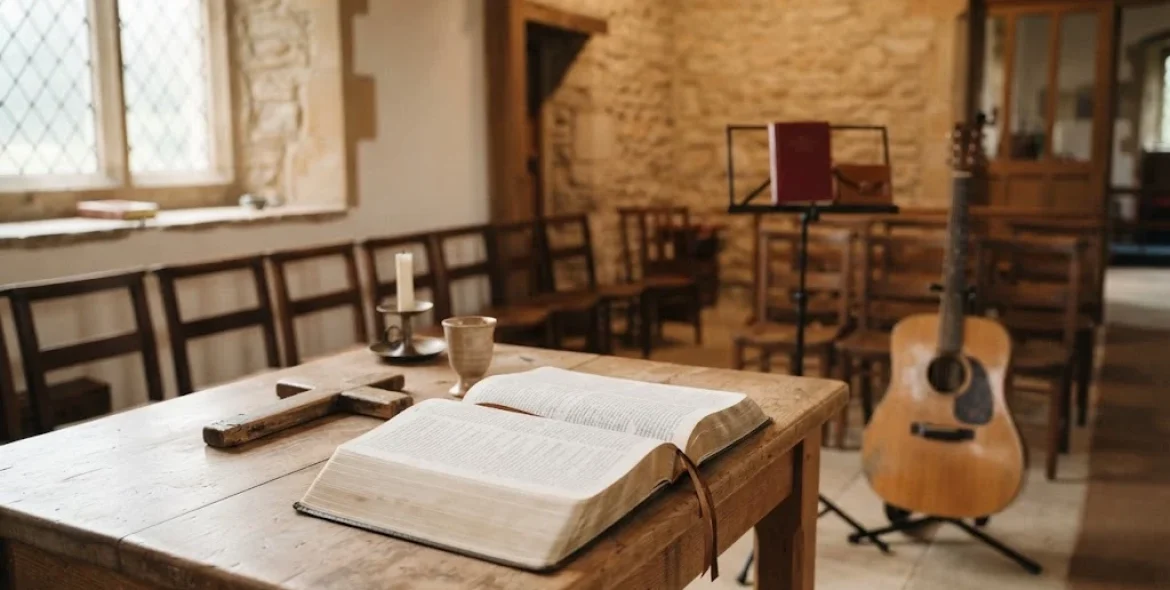
Worship verses can help Christians understand what the Bible teaches about praising God, giving thanks, honouring Him and responding to His character. Worship appears throughout Scripture in many forms. People worship through singing, prayer, thanksgiving, obedience, celebration, reverence and a life devoted to God.
For some Christians, worship is closely associated with congregational singing. However, the Bible presents a broader picture. Scripture includes songs of praise, prayers of thanksgiving, declarations of God’s greatness and instructions about living faithfully before Him. Studying these passages can therefore provide a deeper understanding of what biblical worship means.
If you are beginning to explore Scripture, it can also help to understand what the Bible is and how its different books fit together. Many of the most familiar passages about worship are found in Psalms, but worship is an important theme throughout both the Old and New Testaments.
What Does the Bible Say About Worship?
The Bible presents worship as a response to who God is and what He has done. Scripture repeatedly calls God’s people to praise Him, give thanks, honour His name and recognise His greatness.
Worship is not limited to one particular location or musical style. Biblical worship can involve singing, speaking, kneeling, lifting hands, giving thanks, prayer and faithful obedience.
Psalm 95 provides a well-known example. It calls God’s people to come before Him with thanksgiving and joyful songs and invites them to bow down in worship. The passage connects worship with recognising God as the great King and Creator.
This broader understanding is important when studying praise and worship verses. Rather than viewing worship only as music, readers can examine the many ways Scripture describes a life directed toward God.
Worship Verses from Psalms
Psalms contains some of the Bible’s richest material on worship. The collection includes songs and prayers expressing joy, gratitude, trust, repentance, sorrow and confidence in God.
Psalm 95:1–2 invites readers to sing to the Lord and approach Him with thanksgiving. Psalm 96:1–4 calls God’s people to sing a new song and declare His glory among the nations.
Psalm 100 is another well-known passage about worship. It calls people to serve the Lord with gladness, come before Him with singing and acknowledge that He is God. The Psalm connects praise with thanksgiving and God’s enduring goodness.
Psalm 103 begins with the famous instruction for the soul to bless the Lord and remember His benefits. The passage then lists reasons for praise, including God’s mercy, forgiveness and compassion.
Psalm 150 provides one of the clearest biblical pictures of praise. It calls readers to praise God for His mighty acts and greatness and mentions a range of instruments and joyful expressions of praise.
Scriptures About Praising God
Throughout Scripture, praising God is closely connected with remembering His character and His works. Biblical praise can be personal or communal, quiet or celebratory, spoken or sung.
Psalm 34:1 expresses a commitment to praise God continually. Psalm 47 calls God’s people to clap and sing because of God’s greatness. Psalm 117, one of the shortest Psalms, calls all nations to praise the Lord and emphasises His steadfast love and faithfulness.
These passages demonstrate why praising God in the Bible is such a recurring theme. Praise is not presented simply as an emotional response. It is also an intentional recognition of God’s character and faithfulness.
When studying these passages, consider what each writer identifies as a reason for praise. This can turn a collection of verses into a deeper Bible study rather than simply a list of quotations.
Worship Verses About Thanksgiving
Thanksgiving is another important aspect of biblical worship. Scripture frequently connects giving thanks with recognising God’s goodness and faithfulness.
Psalm 107 repeatedly calls people to give thanks to the Lord because of His steadfast love. 1 Chronicles 16:34 contains a similar call to give thanks because the Lord is good and His steadfast love endures.
In the New Testament, 1 Thessalonians 5:18 encourages believers to give thanks in all circumstances. Philippians 4:6 also connects prayer with thanksgiving, encouraging Christians to bring their requests before God with gratitude.
These passages show that thanksgiving can become part of everyday Christian prayer. Worship does not have to wait for a special service or occasion.
Worship Scriptures About Singing
Singing is one of the most visible forms of worship described in the Bible. The Psalms contain repeated invitations to sing to God, while the New Testament also encourages Christians to sing together.
Psalm 96:1 says to sing a new song to the Lord. Psalm 98 similarly calls God’s people to sing and make a joyful noise. Psalm 149 connects praise with singing and rejoicing among God’s people.
In the New Testament, Ephesians 5:19 encourages believers to address one another with psalms, hymns and spiritual songs while giving thanks to God. Colossians 3:16 also connects singing with teaching, encouragement and gratitude.
These passages show that biblical singing can have both a vertical and communal dimension. Christians sing to God while also encouraging one another through songs that communicate biblical truth.
Worship Verses About God’s Greatness
Many worship passages focus directly on God’s character. Scripture praises God as Creator, King, holy, faithful, merciful, righteous and loving.
Psalm 145 repeatedly celebrates God’s greatness and goodness. It encourages one generation to tell another about God’s mighty acts. Isaiah 6:3 presents heavenly worship centred on God’s holiness, while Revelation contains several scenes in which God and the Lamb receive praise.
Studying these passages can help readers move beyond simply asking how worship makes them feel. Biblical worship is rooted in who God is and in recognising His attributes.
Worship Verses About God’s Holiness
Holiness is a significant theme in biblical worship. In Isaiah 6, the prophet receives a vision in which heavenly beings proclaim God’s holiness. Revelation 4 contains another powerful scene of heavenly worship, with living creatures continually declaring God’s holiness.
Psalm 99 also emphasises God’s holiness and calls His people to exalt Him and worship at His footstool.
These passages connect worship with reverence. Biblical worship includes joy and celebration, but it also includes awe, humility and recognition of God’s holiness.
Worship in Spirit and Truth
One of the most important New Testament passages about worship appears in Jesus’ conversation with the Samaritan woman in John 4. Jesus explains that true worshippers will worship the Father in spirit and truth.
The passage moves the discussion beyond arguments about the correct physical location of worship. Jesus points toward worship that is genuine and grounded in truth.
This teaching is important for understanding Christian worship today. External practices can be meaningful, but Scripture also emphasises the heart and truthfulness of the worshipper.
Romans 12 and Worship Through Daily Life
Romans 12:1 gives another important perspective on worship. Paul urges believers to present their bodies as a living sacrifice, describing this as an act of worship or spiritual service.
This passage broadens the concept of worship beyond singing. A Christian’s decisions, conduct, service and commitment to God can all be understood within a life of worship.
For this reason, studying worship scriptures should include passages about obedience and Christian living as well as songs and praise.
Worship Verses About Bowing and Reverence
The Bible sometimes describes worship through physical expressions such as bowing or kneeling. Psalm 95:6 calls God’s people to come and bow down and kneel before the Lord their Maker.
These physical expressions communicate humility and reverence. Other biblical passages describe people standing, lifting their hands, singing or celebrating.
The variety of biblical expressions reminds us that worship cannot be reduced to one physical posture. Scripture presents multiple ways for people to respond to God.
Worship and Praise in the New Testament
Worship remains central in the New Testament. Jesus teaches about worship, early Christians gather together for prayer and praise, and Revelation presents repeated scenes of worship around God’s throne.
Hebrews 13:15 describes continually offering a sacrifice of praise to God. The verse connects praise with acknowledging God’s name.
Revelation 5 presents worship directed toward God and the Lamb. The heavenly scene emphasises God’s worthiness and the significance of Christ’s work.
These passages connect Old and New Testament themes and show that worship remains central to the Christian understanding of God.
Worship Verses for Prayer
Worship and prayer often overlap. A prayer can begin with praise, move into thanksgiving and then bring requests before God.
The Lord’s Prayer in Matthew 6 begins with reverence for God’s name and a desire for His kingdom and will. The Psalms also provide many examples of prayers that move between praise, difficulty, petition and trust.
When using worship verses during personal prayer, try reading the passage slowly and responding to its message. Rather than simply repeating the words, consider what the passage reveals about God and turn those observations into prayer.
Worship Verses for Church Services
Biblical worship passages can also provide useful material for church services, Bible studies and small groups. A congregation might study a Psalm before singing, discuss a New Testament passage about worship or use a biblical prayer as part of a service.
However, context should remain important. A verse should not be separated from its surrounding passage simply because it sounds suitable for a worship service.
Reading the entire section first helps ensure that the chosen Scripture is understood according to its intended message.
Worship Verses for Personal Bible Study
If you want to study worship as a biblical theme, choose several passages from different parts of Scripture rather than reading only one chapter.
Begin with Psalms such as Psalm 95, Psalm 96, Psalm 100, Psalm 103 and Psalm 150. Then compare these with passages such as John 4, Romans 12, Ephesians 5 and Hebrews 13.
As you study, ask:
- What reason for worship does this passage give?
- What does it teach about God’s character?
- How do people respond to God?
- Is worship individual, communal or both?
- Does the passage mention singing, prayer, thanksgiving or obedience?
- What does this passage suggest about a worshipful life?
This method turns a list of praise and worship verses into a structured study of the biblical theme.
How Worship Connects With Bible Study
Worship and Bible study are closely connected because Scripture gives Christians language and reasons for worship. The more you understand God’s character and works as presented in the Bible, the more deeply you can consider the biblical reasons for praise.
This is one reason it is useful to combine thematic studies with a broader approach to how to study the Bible for beginners. Read the passage, observe its details, investigate its context and then consider its application.
A study Bible can also provide useful introductions and notes when you encounter unfamiliar historical or theological details.
Worship Is More Than Music
Music is an important biblical expression of worship, but Scripture presents worship as something broader. Singing, thanksgiving, prayer, reverence, obedience, service and faithful living can all form part of a Christian’s response to God.
Romans 12:1 is particularly important in this regard. Paul’s description of presenting one’s life to God as a living sacrifice shows that worship reaches into everyday conduct.
This perspective can change how Christians think about ordinary activities. Worship is not necessarily limited to what happens during a church service. The way believers live, serve others and respond to God can also reflect their devotion.
How to Use Worship Scriptures Responsibly
When collecting Bible verses about worship, avoid treating isolated verses as complete explanations of biblical worship. Read each verse in its chapter and consider the purpose of the wider passage.
It is also helpful to compare passages from different biblical books. A Psalm may express worship poetically, while a New Testament letter may explain worship through theological teaching and practical instruction.
Using different genres together provides a fuller picture. If you are studying several passages, record the common themes and note where each passage offers a distinct emphasis.
Worship Verses to Remember
Several passages provide useful starting points for anyone exploring biblical worship:
- Psalm 95: Worship through joyful singing, thanksgiving and reverence.
- Psalm 96: Declaring God’s glory and greatness.
- Psalm 100: Serving God with gladness and giving thanks.
- Psalm 103: Remembering God’s goodness and mercy.
- Psalm 150: Praising God for His mighty acts and greatness.
- John 4:23–24: Worshipping God in spirit and truth.
- Romans 12:1: Offering one’s life to God as an act of worship.
- Hebrews 13:15: Continually offering praise to God.
These passages come from different parts of Scripture and demonstrate the breadth of the biblical teaching on worship.
Start Exploring Biblical Worship
Worship verses provide more than inspirational words. Together, they reveal a biblical theme that includes praise, thanksgiving, singing, prayer, reverence, obedience and devotion to God.
Start with Psalms and then explore what Jesus and the New Testament writers teach about worship. Pay attention to why Scripture calls people to praise God, what it says about God’s character and how worship connects with everyday Christian life.
As you continue studying Scripture, connect these passages with broader Bible study topics and learn how individual books contribute to the larger biblical story. You can also use the books of the Bible in order to navigate between passages more confidently.
Ultimately, the Bible presents worship as a response to God that reaches far beyond a particular song or service. It is a way of recognising who God is, remembering His works, giving thanks and seeking to live faithfully before Him.