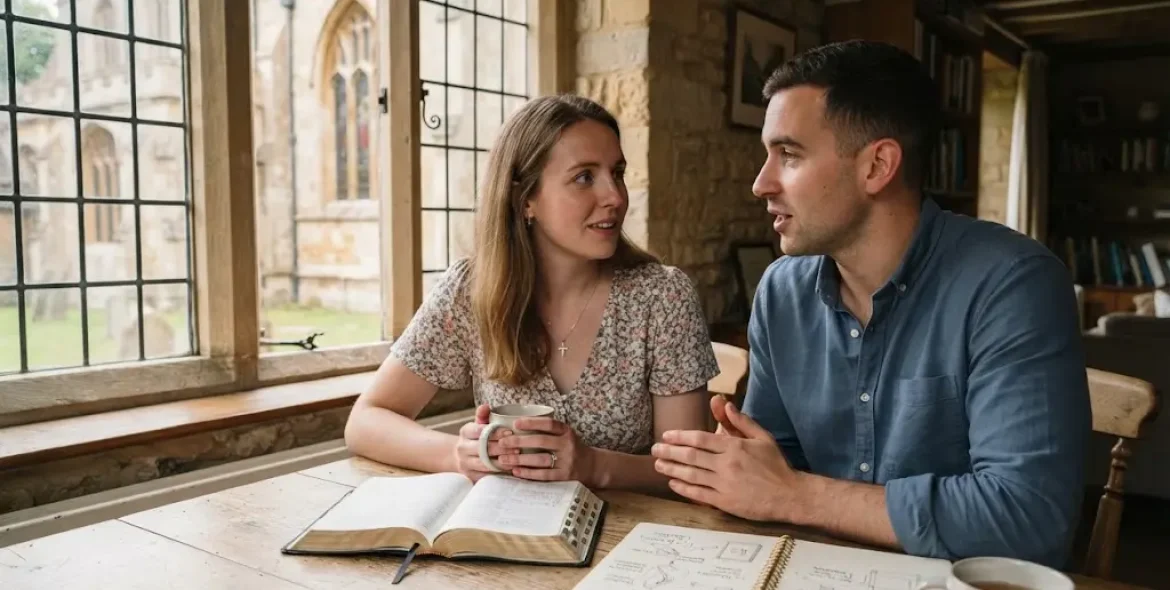
Can a non Christian marry a Christian is a question many people ask when faith becomes part of a serious relationship. A couple may love each other deeply while having very different beliefs about God, church, prayer, morality, family life, or the future. For Christians, the question is therefore not simply whether such a marriage is legally possible. It is also whether marrying someone who does not share Christian faith is wise and consistent with biblical teaching.
The Bible contains principles that Christians commonly use when thinking about this decision. Some passages caution believers about being closely joined to people who do not share their faith, while 1 Corinthians 7 also gives instructions for Christians who are already married to unbelieving spouses. These passages need to be read together rather than treated as contradictory rules.
For someone considering marriage, the most important issue is often not whether two people can care for each other, but whether they can build a shared life when their deepest beliefs are different.
Can a Non Christian Marry a Christian According to the Bible?
The Bible does not present a single sentence that simply says, “A Christian must never marry a non-Christian.” Instead, Christians generally reach their conclusions by considering several passages about faith, marriage, spiritual unity, and relationships.
One important passage is 2 Corinthians 6:14, where Paul tells believers not to be unequally yoked with unbelievers. Christians have traditionally understood this as an important warning about entering relationships in which fundamental spiritual commitments are significantly different.
Marriage is one of the closest and most influential relationships a person can have. Because of that closeness, many Christians understand the principle of being unequally yoked as particularly relevant to choosing a husband or wife.
At the same time, the New Testament recognises that some Christians were already married to non-Christians. Paul’s instructions in 1 Corinthians 7:12-16 are therefore essential for understanding the subject.
Can Christians Marry Non Christians?
The question can Christians marry non Christians needs to distinguish between choosing a spouse and dealing with an existing marriage.
For Christians who are considering marriage, traditional Christian teaching generally encourages choosing a spouse who shares Christian faith. The reasoning is practical as well as theological. Marriage affects worship, values, sexual ethics, family decisions, finances, parenting, friendships, and everyday priorities.
However, Paul gives different instructions to believers who are already married to an unbelieving spouse. In 1 Corinthians 7:12-13, he says that if an unbelieving husband or wife is willing to continue living with the Christian spouse, the Christian should not seek divorce simply because the other person does not believe.
This distinction is important. A biblical instruction about remaining faithful within an existing mixed-faith marriage should not automatically be interpreted as encouragement to deliberately enter such a marriage in the first place.
Should a Christian Marry a Non Christian?
Should a Christian marry a non Christian? From a traditional biblical perspective, Christians are generally encouraged not to enter marriage with someone who does not share their faith.
One reason is that marriage involves much more than romantic compatibility. A Christian may see following Christ as the central purpose of life, while a non-Christian spouse may not share that commitment. This difference can become increasingly important as the relationship develops.
For example, consider decisions about:
- Whether the couple attends church or worships together
- How children will be introduced to Christianity
- Whether prayer is part of family life
- How moral decisions are made
- How religious festivals and traditions are observed
- How extended families are involved
- How the couple responds to major life crises
- What role Christian teaching has in the home
None of these differences automatically means that a marriage will fail. However, they can become significant sources of tension when the couple has fundamentally different convictions.
What Does “Unequally Yoked” Mean?
The phrase “unequally yoked” comes from 2 Corinthians 6:14. A yoke traditionally joined animals together so that they could work as a team. If the animals were poorly matched, their movement could become difficult and inefficient.
Paul uses this image to make a point about spiritual relationships. Christians have therefore often applied the principle to marriage because husband and wife are joined in an unusually close and lasting relationship.
The analogy does not mean that Christians should treat non-Christians as inferior people. The biblical concern is about spiritual direction and shared commitment, not human worth.
A Christian can respect, love, befriend, work with, and care for non-Christians. The question is different when deciding whether to enter a lifelong covenant in which two people will make major decisions together.
Why Spiritual Compatibility Matters in Marriage
Spiritual compatibility does not mean that a husband and wife will agree about everything. Even two committed Christians can have different personalities, church backgrounds, preferences, and theological questions.
It means that both people recognise the same basic spiritual foundation and are willing to build their marriage around it.
When both spouses share Christian faith, they may be able to pray together, worship together, discuss biblical principles, support one another spiritually, and make decisions within a shared framework.
When only one spouse is Christian, that person may sometimes feel spiritually alone. The non-Christian spouse may also feel pressured if Christianity becomes a constant source of disagreement within the home.
These challenges do not necessarily arise in every mixed-faith marriage, but they are worth discussing honestly before marriage.
Can I Marry a Non Christian If We Respect Each Other?
Can I marry a non Christian if we have a strong relationship and respect each other’s beliefs? Respect is valuable, but it does not remove every difficulty created by different religious convictions.
A couple may have excellent communication and still face important questions about faith. For example, one person may want future children to be baptised or raised within a church, while the other may prefer that children make their own religious choices.
Similarly, a Christian spouse may regard regular worship as an essential part of life, while the other person may see Sunday as simply another day of the week.
Before marriage, couples should discuss these issues explicitly rather than assuming that they will somehow resolve themselves later.
What Does 1 Corinthians 7 Say About a Christian Married to a Non-Christian?
1 Corinthians 7 is especially important because Paul directly addresses believers who have an unbelieving spouse.
Paul says that if the unbelieving spouse is willing to remain in the marriage, the Christian should not divorce them. He also addresses the reverse situation: a believing woman with an unbelieving husband should not leave him if he is willing to continue the marriage.
Paul then addresses the situation where the unbelieving spouse chooses to leave. He says that if the unbeliever departs, the Christian brother or sister is not bound in such circumstances and emphasises that God has called believers to peace.
This passage provides an important pastoral principle. Christianity does not teach that a person who becomes a Christian after marriage must automatically abandon a non-Christian spouse.
Instead, Paul encourages the Christian to remain faithful when the unbelieving spouse is willing to remain in the relationship.
Does 1 Corinthians 7 Encourage Christians to Marry Non-Christians?
No. This is an important distinction.
Paul’s instructions in 1 Corinthians 7 concern people who are already married. The passage explains how Christians should respond to an existing mixed-faith marriage.
It does not necessarily function as a recommendation for an unmarried Christian who is deciding whom to marry.
Therefore, Christians who are considering marriage often look at other biblical principles, including the call to spiritual unity, when deciding whether a non-Christian relationship should progress toward marriage.
What About Love?
Love is obviously important in marriage, but Christians generally understand biblical love as more than romantic attraction.
Love includes commitment, patience, faithfulness, sacrifice, forgiveness, kindness, and concern for another person’s wellbeing. A strong emotional connection is valuable, but Christian marriage also involves shared spiritual direction.
This is why a Christian should not assume that loving someone automatically means marrying them is the right decision.
Sometimes love requires recognising a serious difference before making a lifelong commitment. It can be painful to accept that a relationship may not be suitable for marriage even when genuine affection exists.
What If the Non-Christian Is Respectful of Christianity?
A non-Christian partner may be deeply respectful of Christianity without personally believing in Jesus Christ. They may be supportive of their partner attending church, reading the Bible, or praying.
This can make the relationship easier in practical ways, and it should certainly be recognised as a positive quality. However, respect for Christian faith is not the same as sharing Christian faith.
A couple should therefore discuss what each person actually believes rather than relying on broad statements such as “I don’t mind Christianity.”
Questions worth discussing include:
- Does the Christian spouse expect to attend church regularly?
- Would the non-Christian partner be comfortable with children attending church?
- How will religious holidays be observed?
- Will prayer be part of family life?
- What happens if one spouse becomes more committed to their faith?
- How will disagreements about religious education be resolved?
- What role will grandparents and extended family play?
Honest conversations before marriage can reveal differences that romantic feelings might otherwise conceal.
Marriage Between Christians and Non-Christians Can Affect Parenting
One of the biggest practical issues in a mixed-faith marriage can be raising children.
Parents may agree about many aspects of family life but disagree about religious identity. One parent might want to teach children the Bible, pray with them, attend church, and raise them as Christians. The other parent might prefer a neutral approach.
Neither parent should assume that the issue will automatically resolve itself after a child is born. Parenting decisions can become more emotionally difficult once grandparents and wider families become involved.
This is one reason couples should discuss their expectations before marriage.
Christian parents who are already navigating family decisions can also find helpful principles in our guide to Christian parenting.
What About Church Weddings?
Legal marriage and a church wedding are not necessarily the same question.
In England, the Church of England states that couples with different faith backgrounds can marry in church if they meet the relevant legal requirements. Its guidance says that having a different faith from a partner does not necessarily prevent a Church of England wedding. However, the ceremony remains a Christian service, with Christian vows and a Christian character.
This means someone considering a church wedding should speak directly with the relevant vicar because circumstances can vary depending on the couple’s situation and legal requirements.
The Church of England’s official marriage service describes marriage as a lifelong covenant between a man and a woman, involving love, support, and shared life.
For UK couples, it is therefore useful to distinguish between the biblical question of whether a Christian should marry a non-Christian and the separate practical question of whether a particular church can conduct the wedding.
Should I Marry a Non Christian? Questions to Ask
If you are seriously considering marriage to someone who does not share your faith, it may help to step back from the question of whether you can make the relationship work and consider what kind of marriage you are actually building.
Ask yourself:
- Can we openly discuss our different beliefs without resentment?
- Will my Christian faith be respected after marriage?
- Can I practise my faith freely within the relationship?
- How will we raise future children?
- What will happen if one of us becomes more religious?
- How will we handle church attendance?
- How will we approach prayer and religious traditions?
- Are we both comfortable discussing these differences honestly?
- Am I hoping marriage will eventually change my partner’s beliefs?
- Would I still choose this relationship if my partner never became a Christian?
The last question can be particularly revealing. Entering marriage with the expectation that the other person will eventually convert can create disappointment and pressure for both spouses.
What If the Christian Partner Hopes the Non-Christian Will Convert?
It is natural for a Christian who loves someone to hope that their partner will eventually share their faith. However, hope should not become a condition of marriage.
A person should not enter marriage assuming that their spouse’s beliefs will change later. Faith involves personal conviction, and genuine conversion cannot be forced through emotional pressure.
If a Christian partner believes that sharing faith with their spouse is essential, they should consider that reality before making a lifelong commitment.
Likewise, a non-Christian should not pretend to share Christian beliefs simply to preserve a relationship. Marriage built on a false spiritual agreement can create deeper problems later.
What If You Are Already Engaged?
An engagement provides an opportunity for serious reflection before marriage. If the couple has not fully discussed their religious differences, now is the time to do so.
Premarital counselling can be particularly useful. A Christian couple may choose pastoral counselling, while some couples may prefer a qualified relationship counsellor who can help them explore communication, expectations, family planning, and conflict resolution.
The purpose is not necessarily to persuade one person to adopt the other’s beliefs. It is to make sure both people understand what marriage will realistically involve.
If the differences are too significant, postponing a wedding may be wiser than rushing forward simply because invitations have been sent or family members are expecting the marriage to happen.
Can a Christian Marriage Work When Only One Spouse Believes?
Mixed-faith marriages do exist, and some couples build loving and stable families despite significant religious differences. The existence of successful examples does not remove the biblical or practical questions, but it does mean that every couple’s circumstances deserve careful consideration.
For couples already married, Paul’s teaching in 1 Corinthians 7 offers reassurance that the Christian spouse should not automatically seek divorce merely because their partner does not believe. If the non-Christian spouse is willing to remain in the marriage, the Christian is encouraged to continue the relationship.
In these marriages, respect becomes especially important. The Christian spouse may need freedom to practise their faith, while the non-Christian spouse should not be treated as a project or forced into religious participation.
At the same time, serious disagreement about religion can become difficult if either spouse begins to use faith as a weapon. Honest communication and appropriate support can help couples navigate these challenges.
How This Fits With Biblical Marriage
The Bible’s wider teaching presents marriage as a relationship involving deep commitment, faithfulness, love, and unity. Scripture also calls husbands to love their wives sacrificially and care for them.
For more on this aspect of Christian marriage, see our article on what the Bible teaches about husbands loving their wives.
When a couple shares Christian faith, these teachings can become part of a common spiritual framework. When they do not, the Christian partner may have to practise their faith without the same level of spiritual partnership at home.
Can a Non Christian Marry a Christian? The Biblical Perspective
So, can a non Christian marry a Christian? Legally and practically, such marriages can exist, and in some settings a church wedding may also be possible. The more specific Christian question is whether a believer should intentionally choose a non-believing spouse.
Traditional Christian interpretation generally advises believers to marry within the faith because marriage creates a deep spiritual partnership. The principle of not being unequally yoked is commonly applied to this decision, while the creation pattern and broader New Testament teaching emphasise unity within marriage.
However, 1 Corinthians 7 makes an important distinction for people who are already married. Paul tells Christians with willing unbelieving spouses not to seek divorce simply because of the difference in faith.
For someone deciding whether to marry, therefore, the wisest approach is to take the spiritual difference seriously rather than assuming love will automatically overcome it. Discuss faith, children, church, prayer, family traditions, and future expectations honestly before making a lifelong commitment.
Christian marriage is ultimately about more than finding someone you love. It is about building a shared life. For believers, that shared life includes faith in Christ. That is why the question of spiritual compatibility deserves careful thought, prayer, honest conversation, and wise counsel before marriage.