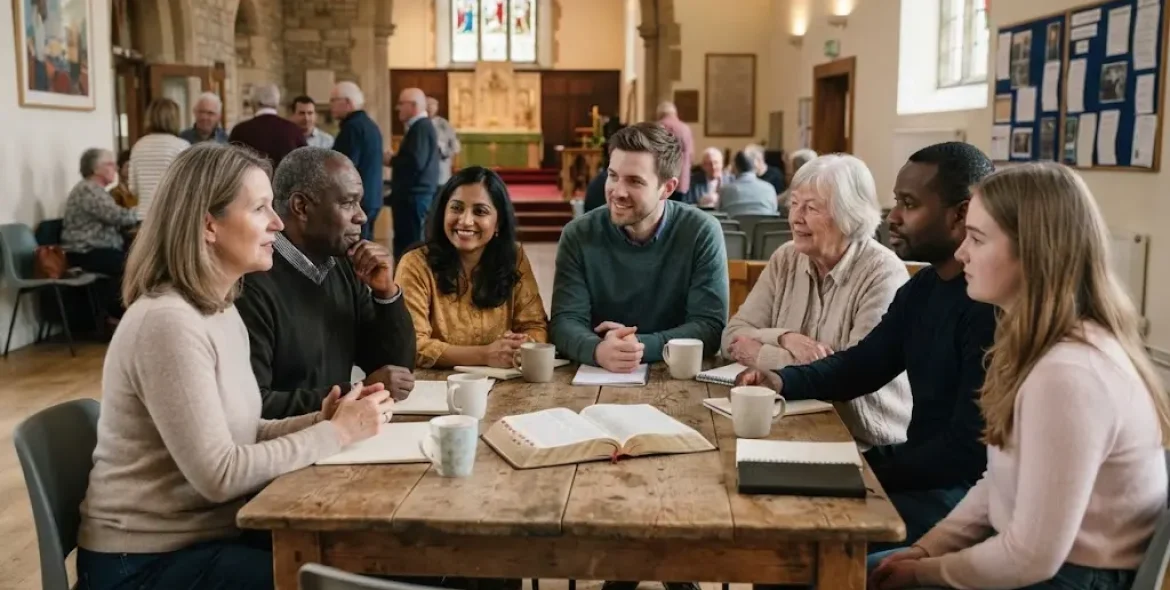
Christian views on homosexuality vary significantly between churches, denominations, theologians, and individual Christians. Some Christian traditions teach that same-sex sexual relationships are inconsistent with biblical teaching, while others believe committed same-sex relationships can be compatible with Christian discipleship. There are also Christians who hold more nuanced positions, distinguishing between questions of sexual orientation, sexual behaviour, marriage, and personal identity.
Because Christianity is rooted in the Bible, discussions about homosexuality often begin with Scripture. However, Christians do not always interpret the relevant passages in the same way. Understanding the debate therefore requires careful attention to biblical context, Christian tradition, pastoral concerns, and the distinction between what Scripture says and how different churches interpret it.
One question is particularly important throughout this discussion: can someone who experiences same-sex attraction or identifies as gay genuinely follow Jesus Christ? Christian traditions answer this question differently, but many Christians agree that every person should be treated with dignity, compassion, and respect.
What Are Christian Views on Homosexuality?
There is no single position that represents every Christian denomination. Broadly speaking, Christian approaches can be divided into several perspectives.
Traditional or non-affirming Christians generally believe that Scripture teaches sexual intimacy belongs within marriage between a man and a woman. They may distinguish between experiencing same-sex attraction and engaging in same-sex sexual behaviour, arguing that temptation or attraction is not itself equivalent to a sinful action.
Affirming Christians generally believe that committed, faithful same-sex relationships can be consistent with Christian faith. They often argue that the biblical passages traditionally used in discussions of homosexuality address particular historical practices rather than modern loving, lifelong same-sex relationships.
Between these positions are Christians who remain uncertain or continue studying the issue. They may believe the Bible is authoritative while recognising that faithful Christians have reached different conclusions about how particular passages should be interpreted.
These differences should not be confused with the idea that Christianity has no teaching about sexuality. Rather, the disagreement concerns how biblical teaching should be understood and applied.
What Does the Bible Say About Same-Sex Relationships?
Several biblical passages are central to Christian discussions about homosexuality. The Old Testament includes prohibitions concerning male same-sex sexual activity in Leviticus 18:22 and 20:13. The New Testament passages most frequently discussed include Romans 1:26-27, 1 Corinthians 6:9-11, and 1 Timothy 1:9-10.
Traditional Christian interpretations generally understand these passages as prohibiting same-sex sexual relationships. They connect these texts with the wider biblical pattern of sexual intimacy being located within marriage between a man and a woman.
Affirming Christians often challenge this interpretation by examining the cultural and historical circumstances behind the passages. They may argue that the biblical writers were addressing practices such as exploitation, prostitution, excessive lust, or relationships understood differently from modern committed same-sex partnerships.
Because the debate involves questions of language, historical context, theology, and biblical interpretation, Christians who take Scripture seriously can reach different conclusions.
Christian Beliefs on Homosexuality and the Creation Account
Genesis 1 and 2 are important to traditional Christian teaching about marriage and sexuality. Genesis describes humanity as male and female and later presents a man leaving his parents and being united with his wife.
Jesus refers to this creation account in Matthew 19 when discussing marriage. Traditional Christian theology therefore sees the creation narrative and Jesus’ teaching as establishing a pattern of marriage involving a man and a woman.
Affirming Christians may respond that the creation account establishes important principles such as companionship, covenant, faithfulness, and mutual care without necessarily resolving every question about modern same-sex relationships.
This is one reason debates about homosexuality often overlap with wider Christian discussions about marriage. The question is not only whether same-sex attraction is addressed in Scripture but also what the Bible means by marriage and sexual ethics.
Can Gay People Be Christians?
Can gay people be Christians? Yes, gay people can identify as Christians and participate in Christian communities. In practice, there are Christians who identify as gay across a wide range of denominations and theological traditions.
The more difficult theological question is how a particular church understands same-sex relationships and sexual ethics. Some churches welcome gay people fully while affirming same-sex relationships and marriage. Others welcome gay people as members while maintaining traditional teaching about sexual relationships. Still others encourage celibacy for Christians who experience same-sex attraction.
These positions should be distinguished from the basic Christian claim that human worth does not depend on sexual orientation. Christianity teaches that every person is made in God’s image and should be treated with dignity.
Christians can therefore disagree about sexual ethics without treating another person as less valuable or less worthy of compassion.
Can a Christian Be Gay?
The question can a Christian be gay often combines two different issues: identity and behaviour.
Some Christians use the word “gay” to describe their sexual orientation. Others prefer terms such as “same-sex attracted” because they believe their Christian identity should not be defined primarily by sexuality.
Traditional Christians may say that experiencing same-sex attraction does not automatically constitute sinful behaviour. Their concern centres on sexual activity and relationships rather than the involuntary experience of attraction itself.
Affirming Christians generally believe that a person can be both Christian and gay while also entering a faithful same-sex relationship. They interpret Scripture in a way that allows committed same-sex relationships within Christian discipleship.
Therefore, the answer depends partly on what a person means by “gay” and which Christian theological tradition they follow.
Can You Be a Christian and Gay?
The question can you be a Christian and gay is often deeply personal. Someone asking it may not simply be looking for an abstract theological argument. They may be wondering whether they still belong within the Christian faith.
The New Testament repeatedly places faith in Christ at the centre of Christian identity. Christians are called to follow Jesus, love God, love their neighbours, repent, forgive, and grow in holiness.
Christian communities may disagree about how sexuality should be understood, but rejecting a person through humiliation, hostility, or cruelty is not a healthy expression of Christian love.
Someone wrestling with questions about sexuality and faith may therefore benefit from finding a church community where they can ask honest questions without being mocked or pressured into hiding their experiences.
Can I Be Gay and Christian?
For someone asking, can I be gay and Christian, it is important to recognise that Christianity contains different approaches to this question.
An affirming church may say that being gay and following Christ are fully compatible, including the possibility of a faithful same-sex relationship.
A traditional church may say that a person can be Christian while experiencing same-sex attraction but that sexual relationships should remain within heterosexual marriage.
Neither position should be described as representing every Christian. The disagreement is genuine and exists among Christians who appeal to Scripture, theology, tradition, prayer, and pastoral experience.
For someone making decisions about church membership or relationships, it is therefore sensible to ask a particular church what it actually teaches rather than assuming that every Christian congregation has the same position.
Christian Faith and Homosexuality: Why Interpretations Differ
Christian faith and homosexuality can be difficult to discuss because biblical interpretation involves more than locating individual verses. Christians also need to consider the meaning of ancient words, the social setting in which biblical texts were written, the purpose of each passage, and how individual texts fit into the wider biblical narrative.
For example, traditional interpreters may argue that the biblical pattern is consistent enough across both Testaments to conclude that same-sex sexual relationships are outside God’s intended design.
Affirming interpreters may argue that the biblical authors were not addressing the modern concept of a mutually committed same-sex marriage. They therefore believe that applying ancient prohibitions directly to modern relationships requires additional interpretation.
The disagreement is consequently not simply about whether Christians respect the Bible. Both sides commonly claim biblical authority while reaching different conclusions about interpretation.
Does Christianity Support LGBTQ People?
The phrase “does Christianity support LGBTQ” can mean several different things. It may refer to whether Christians should welcome LGBTQ people into churches, whether churches should recognise same-sex relationships, whether Christians should support same-sex marriage, or whether LGBTQ identity is compatible with Christian theology.
Those questions do not necessarily receive identical answers.
A church might welcome LGBTQ people as part of its congregation while maintaining a traditional position on sexual ethics. Another church might welcome LGBTQ people and affirm same-sex relationships. A third church might have a formal policy but allow significant disagreement among its members.
Christian hospitality should therefore not be confused with complete theological agreement. A congregation can disagree with someone’s beliefs or behaviour while still treating that person with dignity and care.
The Church of England and Gay Marriage
The Church of England on gay marriage is particularly relevant to UK readers because its current position combines traditional teaching about Holy Matrimony with newer provisions for prayers involving same-sex couples.
Also The Church of England currently maintains that Holy Matrimony is a lifelong covenant between one man and one woman. Same-sex couples cannot currently marry in a Church of England church under its rules for Holy Matrimony.
At the same time, the Church of England introduced the Prayers of Love and Faith in 2023. These prayers allow same-sex couples to receive public prayers of dedication, thanksgiving, and asking for God’s blessing within regular church services.
This means that the Church of England’s current position cannot accurately be reduced to either “the Church supports gay marriage” or “the Church rejects gay people.” Its position is more nuanced: it retains its existing doctrine of Holy Matrimony while providing specific forms of prayer and pastoral recognition for same-sex couples.
The issue remains under active discussion. In 2026, the Church of England established new groups to continue work on relationships, sexuality, and gender following the conclusion of the Living in Love and Faith programme. This means that aspects of the Church’s future approach remain subject to ongoing consideration.
Church of England and Gay Marriage: What Has Changed?
The distinction between civil marriage and Holy Matrimony is important in understanding the Church of England and gay marriage.
UK law permits same-sex civil marriage. However, the Church of England’s own rules for Holy Matrimony have not been changed to permit same-sex couples to marry in the Church of England.
The Prayers of Love and Faith represent a separate form of pastoral and liturgical provision. They are not the same thing as a same-sex wedding service.
This distinction explains why it is possible for the Church of England to offer prayers for same-sex couples while continuing to describe Holy Matrimony as a union between one man and one woman.
What Does the Bible Teach About Love?
Whatever position Christians take on homosexuality, the Bible’s teaching about love remains central to Christian discipleship.
Jesus teaches his followers to love God and their neighbours. The New Testament also describes Christian love through qualities such as patience, kindness, humility, truthfulness, and perseverance.
This means that discussions about sexuality should not become excuses for cruelty. Christians should be able to discuss difficult theological questions while remembering that the person they disagree with is still a human being deserving of dignity.
For Christians, love does not necessarily mean agreeing with every belief or behaviour. Equally, disagreement does not justify contempt, bullying, exclusion without proper pastoral consideration, or dehumanising language.
Should Christians Agree About Homosexuality?
Christians do not agree about every theological issue. Throughout church history, Christians have debated questions about baptism, communion, church government, divorce, remarriage, women’s ministry, predestination, and many other subjects.
Homosexuality is one of the most emotionally and culturally significant contemporary disagreements, but Christians should still approach it with intellectual honesty and humility.
It is possible to hold a strong conviction while acknowledging that another Christian has reached a different conclusion after studying Scripture seriously. That does not require abandoning one’s beliefs. It requires recognising the complexity of the discussion.
For individuals and families, the practical question may be which church community most closely reflects their understanding of Scripture and Christian discipleship. Reading a church’s official teaching and speaking with its leaders can provide greater clarity than relying on assumptions.
Christian Views on Homosexuality and Christian Family Life
Questions about homosexuality can affect dating, marriage, parenting, church involvement, and family relationships. Parents may wonder how to respond when a child or relative identifies as gay. Couples may disagree about what Scripture teaches. Church members may struggle to reconcile their beliefs with the experiences of friends or relatives.
In these situations, listening is often an important first step. A family member may need the opportunity to explain what they are experiencing before a theological discussion begins.
Christian parenting also requires wisdom when children encounter questions about relationships and sexuality. Parents can teach their convictions while communicating that their love for their children is not conditional upon perfect agreement.
For broader guidance on raising children within Christian faith, see our guide to Christian parenting.
How Should Christians Approach Difficult Questions About Sexuality?
A thoughtful Christian approach should begin with Scripture but should not stop at isolated quotations. Christians can study the relevant passages, examine their historical context, consider the wider teaching of the Bible, and learn how different traditions interpret them.
Prayer and humility also matter. Questions about sexuality can affect real people, marriages, families, friendships, and church communities. The theological discussion therefore has practical consequences.
Christians who disagree can still aim for honesty, compassion, patience, and respectful conversation. Those qualities do not resolve every theological disagreement, but they can change the way disagreement is experienced.
Christian Views on Homosexuality: A Balanced Conclusion
Christian views on homosexuality are diverse. Traditional Christian teaching generally understands same-sex sexual relationships as inconsistent with biblical sexual ethics, while affirming Christians interpret the relevant passages differently and believe committed same-sex relationships can be compatible with Christian discipleship.
The question of whether someone can be both gay and Christian also depends on the theological tradition being considered. Many Christians believe that gay people can genuinely follow Christ, even though churches differ substantially over whether same-sex relationships should be affirmed.
For UK readers, the Church of England provides a useful example of this complexity. It maintains its traditional definition of Holy Matrimony while allowing the Prayers of Love and Faith for same-sex couples and continuing to work through questions surrounding relationships, sexuality, and marriage.
Ultimately, Christians approaching this subject should seek to understand Scripture carefully, recognise legitimate differences in interpretation, and treat people with dignity. Difficult theological questions deserve serious study, but they should also be approached with the love, humility, and compassion that are central to Christian discipleship.
For readers exploring other biblical questions about relationships and marriage, our guides to husbands loving their wives according to the Bible and marriage between Christians and non-Christians provide further context.