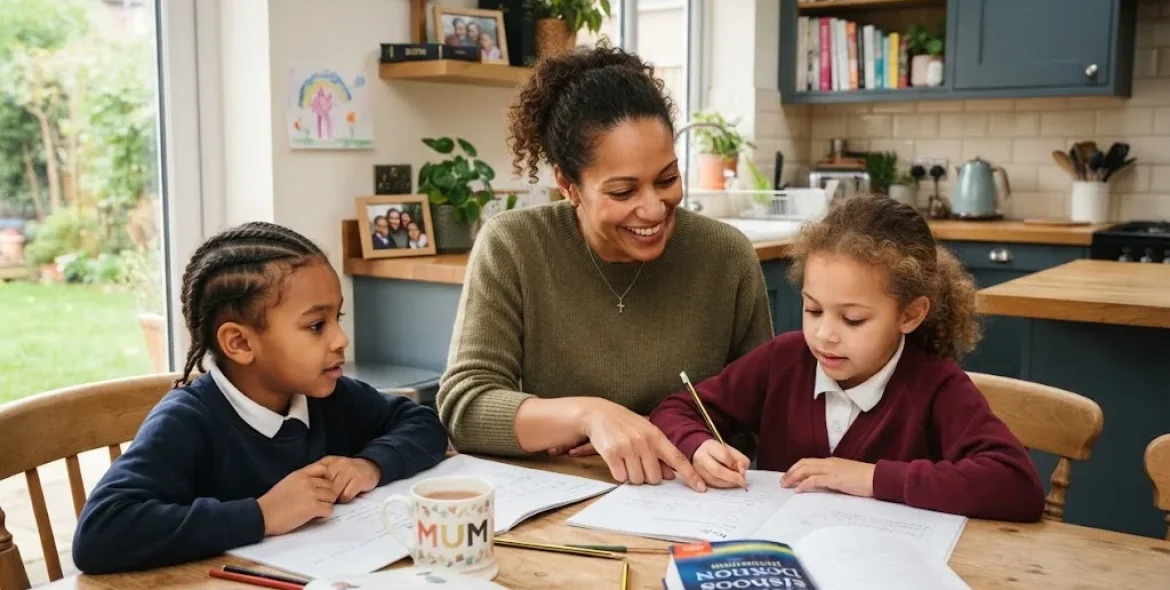
Single parenting can bring unique responsibilities, emotional challenges and practical pressures. Raising children while managing a household largely on your own can require patience, resilience and careful planning. For Christians, it can also raise questions about faith, family life, identity and how to provide children with a secure and loving home.
A single parent family does not have to be defined only by what is missing. It can also be a place where children experience love, stability, forgiveness, responsibility and a strong sense of belonging. While single parenting can be difficult, parents can build healthy family relationships by recognising their limitations, accepting appropriate support and creating consistent routines.
Christian faith can provide another source of encouragement. Scripture repeatedly presents God as caring for families, children and people who are experiencing difficult circumstances. That does not remove the practical realities of raising children alone, but it can give parents a framework for approaching those responsibilities with hope and wisdom.
What Is Single Parenting?
Single parenting generally refers to raising one or more children when one parent carries the primary responsibility for their care. Circumstances vary considerably. A parent may be raising children after divorce, separation, bereavement or the end of a relationship. Some people become parents without being married, while others may have a co-parent who remains involved but does not live in the same household.
Because families take many forms, it is important not to make assumptions about why someone is parenting alone. Two single parents can have completely different experiences, levels of support and relationships with the other parent.
The most important issue is the wellbeing of the children and the parent’s ability to create a safe, loving and stable environment.
The Challenges of Raising a Single Parent Family
A single parent family may face practical pressures that would otherwise be shared between two adults. Everyday responsibilities such as school runs, meals, appointments, household tasks and work can all fall heavily on one person.
Financial pressure can also be significant. A single income may have to cover housing, food, childcare, education, transport and other household expenses. Even where financial circumstances are manageable, the mental load of making decisions alone can be tiring.
There can also be emotional challenges. A parent may feel lonely, overwhelmed or uncertain about whether they are doing enough. Children may experience their own emotions about changes in family circumstances, particularly if the transition to single-parent life followed separation or divorce.
Recognising these challenges does not mean assuming that single-parent families are unhealthy. It simply acknowledges that parenting alone can require considerable effort and support.
Single Parenting Does Not Mean Parenting Without Support
One of the most useful principles for single parenting is learning that asking for help is not a sign of failure.
Parents sometimes feel that they must demonstrate complete independence. In reality, healthy families often depend on wider networks of support. Grandparents, relatives, trusted friends, church communities, schools and appropriate professional services can all contribute in different ways.
Support does not necessarily mean someone else taking over parental responsibility. Sometimes practical help is enough. A friend who provides an occasional meal, a relative who helps with school collection or a trusted church member who offers encouragement can make an enormous difference.
For Christian parents, the local church can be particularly valuable when it provides genuine community rather than judgement. A supportive congregation can help a parent feel connected rather than isolated.
A Single Parent Mother Needs Support, Not Assumptions
A single parent mother may experience pressure to manage every aspect of family life while also maintaining employment, friendships and personal wellbeing.
There can also be social expectations that make asking for assistance uncomfortable. Some mothers may worry that accepting help makes them appear incapable. Others may have experienced judgement about how their family came to be.
Christian communities have an opportunity to respond differently. Practical compassion can include listening without immediately offering criticism, helping with everyday responsibilities and making sure single mothers remain included in church and community life.
Children also benefit when the adults around their parent demonstrate respect rather than pity.
Building Stability in a Single Mother Family
A single mother family can benefit from predictable routines. Children often feel more secure when they know what to expect from ordinary family life.
Simple routines around waking, meals, homework, bedtime and weekends can provide structure even when other parts of life feel uncertain. The routine does not need to be perfect. Consistency matters more than elaborate schedules.
It is also helpful to establish clear household expectations. Children need age-appropriate boundaries, responsibilities and consequences. A single parent should not feel guilty about setting rules simply because they are parenting alone.
At the same time, rules work best when children understand that discipline and love belong together. A child can be corrected while still being reassured that they are valued and secure.
How Can Christians Support Children in a Single Parent Family?
Children need to know that their family is worthy of respect. They should not feel that being part of a single-parent household makes them less complete or less loved.
Adults should be careful about speaking negatively about the child’s other parent in front of them. Even when adults have legitimate disagreements, children can be deeply affected when they feel forced to choose sides.
Where the other parent is safely and appropriately involved, cooperation can benefit the child. Communication about school, health, routines and important decisions can reduce unnecessary conflict.
Where contact is unsafe or inappropriate, however, the priority should be the child’s wellbeing and safety. Family circumstances vary, so there is no universal co-parenting arrangement that works for every household.
Faith and Single Parenting
Christian faith can become an important part of family life without turning the home into a place of unrealistic expectations.
Prayer, Bible reading, church attendance and conversations about faith can become ordinary parts of family routines. These practices do not have to be elaborate. A short prayer at bedtime or a simple conversation about gratitude can help children understand that faith is connected to everyday life.
Parents should also remember that children may ask difficult questions. They may wonder why their family looks different from their friends’ families or why their parents are no longer together.
Honest, age-appropriate answers are usually more helpful than avoiding the subject. Christian parents can acknowledge that families experience brokenness while also teaching children about forgiveness, love, responsibility and hope.
What Does Becoming a Parent Look Like When You Are Alone?
Becoming a parent changes life regardless of whether someone has a partner. When a person enters parenthood without a spouse or becomes a single parent later, the adjustment can be particularly demanding.
Parenthood involves learning to put another person’s needs alongside your own while continuing to manage work, finances, relationships and personal responsibilities. A parent does not need to have everything figured out immediately.
It is normal to learn through experience. Parenting involves mistakes, adjustments and growth. What matters is creating an environment where children are cared for and where the parent is willing to learn and improve.
For someone preparing to become a parent without a partner, it can be particularly helpful to build a support network before the child arrives. Practical planning can reduce pressure later.
What Does It Mean to Be Parents?
The phrase to be parents can sometimes create an unrealistic image of what family life should look like. There is no single family structure that guarantees excellent parenting.
Being a good parent is less about creating a perfect household and more about consistently providing care, guidance, boundaries and emotional security.
Children need adults who listen to them, teach them, correct them and encourage them. They also need to see adults apologise when they make mistakes. A parent who can say “I was wrong” demonstrates an important lesson about humility and responsibility.
For Christian families, parenting can also involve modelling faith rather than merely instructing children about it. Children notice how adults treat others, respond to conflict and handle disappointment.
Managing the Emotional Pressure of Single Parenting
One of the hardest aspects of single parenting can be the feeling that there is no one else to share the emotional responsibility with at the end of a difficult day.
A parent may have to make decisions about school, discipline, finances or family plans while also processing their own emotions. Over time, this can contribute to exhaustion.
Building regular opportunities for rest is therefore important. Rest does not have to mean an expensive holiday or a completely free weekend. It can mean arranging childcare for a few hours, taking a walk, meeting a trusted friend or simply creating a quiet period during the week.
Parents should also recognise when they need more substantial support. Persistent feelings of hopelessness, severe stress or an inability to cope should not simply be dismissed as part of parenting. Speaking with an appropriate professional can be a responsible step.
Setting Healthy Boundaries With the Other Parent
Where a child’s other parent remains involved, boundaries can help reduce unnecessary conflict.
Communication should focus on the child’s needs rather than repeatedly reopening old relationship disagreements. Practical subjects such as schedules, education, activities and financial responsibilities can be discussed as clearly as possible.
Children should not be used as messengers between adults. Asking a child to carry information about disagreements can place them under emotional pressure that they should not have to carry.
Where communication is particularly difficult, written communication or structured co-parenting arrangements may sometimes reduce conflict. Professional family support can also be useful when appropriate.
Discipline in a Single Parent Household
Discipline can feel particularly challenging when one parent has to enforce boundaries alone. However, being the only parent in the household does not mean that discipline needs to become either excessively strict or completely relaxed.
Children benefit from clear expectations. Rules should be appropriate to their age and explained in language they can understand.
Consistency is more important than having a long list of rules. A small number of clear expectations can be easier for both parent and child to maintain.
Christian parents can also view discipline as part of teaching rather than simply punishment. The aim should be to help children understand responsibility, consequences and respect while maintaining a secure relationship.
Helping Children Feel Secure
Security comes from more than family structure. Children can feel secure when they know they are loved, listened to and protected.
Small actions can communicate this every day. Eating together when possible, listening to stories about school, maintaining familiar bedtime routines and making time for individual conversations can all strengthen connection.
Children may also need reassurance during major family changes. If a separation or divorce has occurred, they may wrongly believe that they caused the situation. Age-appropriate reassurance can help them understand that adult relationship problems are not their responsibility.
For Christians, the message that a child is loved by God can also provide an important foundation, provided it is communicated alongside practical care rather than used as a substitute for it.
Single Parenting and Church Community
A healthy church can play a valuable role in supporting single parents.
Support might include practical assistance, children’s activities, mentoring, prayer or simply making sure single parents are not left on the margins of church life.
Churches should avoid creating an environment where every family event assumes the presence of two parents. Invitations, activities and community life can be structured in ways that welcome different family circumstances.
Single parents should also be treated as whole members of the church rather than as people who only need help. They have gifts, skills and experiences that can contribute meaningfully to the wider Christian community.
Finding Hope as a Single Parent
Single parenting can involve seasons of exhaustion, uncertainty and grief. However, a difficult family circumstance does not determine a parent’s value or a child’s future.
Families can grow through difficult experiences. Children can learn compassion, responsibility and resilience. Parents can discover strengths they did not realise they possessed. None of this means that hardship should be romanticised. It simply means that difficult circumstances do not make a family hopeless.
Christian hope is ultimately grounded in God’s character rather than in perfect family circumstances. Parents can bring their fears, limitations and hopes to God while continuing to take practical steps to care for their children.
When a Single Parent Is Considering a New Relationship
Dating after becoming a single parent can involve additional considerations. A parent is no longer thinking only about their own feelings and future. The potential relationship may also affect their children.
This can make patience especially important. A new relationship should not be rushed simply because a parent wants companionship.
Christian parents may also want to consider whether a potential partner shares their faith, values and understanding of family life. Our guide to whether a Christian can date a non-Christian explores the importance of shared faith when Christians consider serious relationships.
Where marriage becomes a possibility, the wider Christian teaching about marriage and divorce also becomes relevant. Understanding the commitment involved can help a parent make thoughtful decisions rather than decisions driven primarily by loneliness.
Practical Ways to Make Single Parenting More Manageable
There is no single solution that removes every pressure, but practical organisation can make daily life more manageable.
- Create simple weekly routines that children can understand.
- Plan meals and important appointments ahead when possible.
- Keep school information and important documents organised.
- Build a reliable network of trusted adults.
- Accept appropriate help instead of trying to handle everything alone.
- Set realistic expectations for yourself and your children.
- Make regular time for meaningful conversations with your children.
- Protect opportunities for rest and personal renewal.
- Seek professional support when family circumstances become difficult to manage alone.
The goal is not to run a perfect household. The goal is to create enough structure and support for family life to remain healthy and sustainable.
Final Thoughts on Single Parenting
Single parenting can be demanding, but a single-parent household can also be a loving, stable and meaningful family environment. The quality of family relationships depends on many factors beyond whether one or two parents live in the home.
For Christian parents, faith can provide a foundation of hope while practical support helps deal with the everyday realities of raising children. Prayer and Scripture matter, but so do routines, healthy boundaries, community, rest and asking for help when it is needed.
Whether someone is a single mother, a single father, a parent after divorce or someone becoming a parent without a partner, their circumstances deserve compassion rather than judgement.
Children need love, security, guidance and adults who are willing to keep learning. A single parent does not have to be perfect to provide those things. With appropriate support, thoughtful parenting and a strong sense of family connection, it is possible to build a home where children can grow with confidence, care and hope.