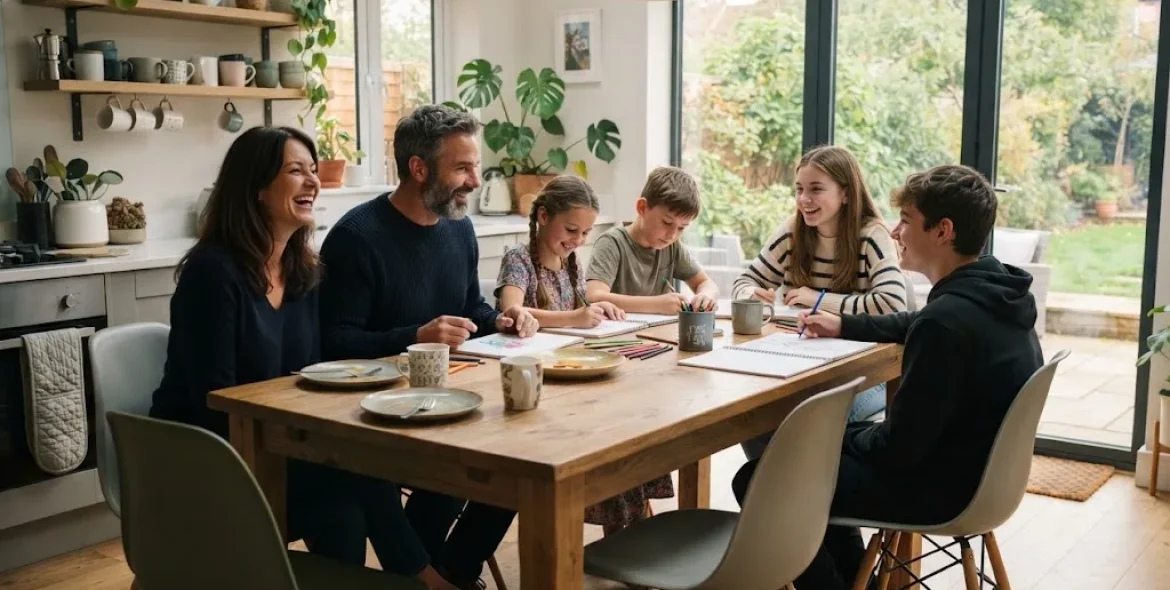
What is a blended family? A blended family is a household where two adults form a family relationship and at least one of them has children from a previous relationship. The family may include biological children, stepchildren and, in some cases, children the couple have together. Blended families can look very different from one household to another, but they share the experience of bringing people together from different family backgrounds.
For Christians, understanding what is a blended family can be especially useful when thinking about marriage, parenting, forgiveness and family relationships. A stepfamily may require patience because adults and children are adjusting to new roles at the same time. Building trust does not necessarily happen immediately, and healthy relationships often develop gradually.
A blended household can become a loving and stable family. However, it usually works best when adults recognise that forming a family is a process rather than something that happens automatically after a wedding.
What Is a Blended Family?
The simplest blended family definition is a family formed when two adults enter a committed relationship or marriage and at least one brings children from a previous relationship.
For example, a mother with two children may marry a man who also has children from an earlier relationship. The resulting household can include biological siblings, stepsiblings and stepparents.
Another blended family might include one parent with children and another adult without children. The family structure can also change over time if the couple have children together.
Therefore, there is no single appearance that defines blended families. What makes the family “blended” is the joining of existing family relationships into a new family structure.
What Is the Definition of a Blended Family in Everyday Life?
The formal definition is useful, but everyday family life involves much more than who lives under one roof.
When families blend, people may need to adjust to new expectations and relationships. A child who previously lived with one parent may now have a stepparent in the home. Two children who have never lived together may suddenly become stepsiblings. Adults may also have to learn how to make parenting decisions together.
These changes can be exciting, but they can also create uncertainty.
A child may wonder what their new family means for their relationship with their biological parent. A stepparent may be unsure about how much authority they should exercise. Parents may disagree about discipline, routines or household rules.
Recognising these questions early can make it easier to address them constructively.
How Do Blended Families Form?
Blended families can form in several different circumstances.
- A divorced parent remarries.
- A widowed parent enters a new marriage or long-term relationship.
- Two parents who already have children from previous relationships marry.
- A parent enters a committed relationship with someone who does not have children.
- A couple have children together after bringing children from previous relationships into the household.
The circumstances surrounding the formation of a blended family can influence how family members experience the transition. A child whose parents divorced may have different concerns from a child whose parent died. Similarly, a teenager may respond differently to a new stepparent than a young child.
There is therefore no universal timetable for becoming comfortable in a new family structure.
What Is a Blended Family Like for Children?
Children can experience many different emotions when their family changes.
Some children may be excited about gaining new siblings or having another supportive adult in their lives. Others may feel confused, angry, protective of their biological parent or worried that their place in the family will change.
These feelings can sometimes exist at the same time. A child may like their stepparent while still feeling uncomfortable about their parents’ divorce. They may enjoy spending time with stepsiblings while also missing the family arrangement they had before.
Adults should not assume that children will automatically share their enthusiasm about a new marriage or household.
Giving children time to express their feelings can help them feel heard. It is also important to reassure them that gaining a stepparent or stepsiblings does not mean losing the love or importance of their existing family relationships.
Understanding the Stepfamily Relationship
A stepfamily is a family in which at least one adult has a child from a previous relationship and the new partner becomes a stepparent.
The word “stepparent” describes a family role, but it does not automatically describe the emotional relationship between an adult and child. A stepparent and stepchild may need considerable time to build trust and affection.
This is particularly important when a stepparent tries to take on a parental role too quickly. Children may resist if they feel that an adult they barely know is suddenly trying to control every part of their lives.
Respect can be built gradually through consistency, kindness and reliable behaviour.
What Is a Blended Household?
A blended household may include several different relationships under one roof. Depending on the family, it could include a mother, father, biological children, stepchildren and children born to the new couple.
This can create a rich family environment, but it can also make household organisation more complicated.
Families may need to agree on practical issues such as:
- Bedtime and morning routines.
- Household responsibilities.
- Rules around technology and social media.
- Discipline and consequences.
- School responsibilities.
- Family activities.
- Financial expectations.
- Time spent with biological parents outside the household.
The aim should not be to make every child experience exactly the same circumstances. Fairness does not always mean identical treatment. Different ages and needs may require different rules or responsibilities.
Why Blended Families Can Be Challenging
One reason blended families can be difficult is that several major transitions may happen at once.
A parent may be adjusting to a new marriage while children are adjusting to a new household. Adults may be managing co-parenting arrangements with former partners while also establishing new routines.
Old family experiences can also influence new relationships. A child may carry memories of divorce, conflict or loss into the new household. An adult may bring fears from a previous marriage.
These experiences do not mean that a blended family is destined to fail. They simply demonstrate why patience and communication are important.
Common Challenges in Blended Families
Different parenting styles
One parent may prefer strict rules while another takes a more relaxed approach. If adults do not discuss these differences, children may quickly notice inconsistencies.
Parents should ideally discuss major parenting principles privately and agree on household expectations before enforcing them together.
Sibling and stepsibling conflict
Children who become stepsiblings may not immediately behave like close brothers and sisters. Arguments over belongings, privacy, attention and space are normal possibilities.
Adults can encourage respect without demanding instant emotional closeness.
Loyalty concerns
A child may worry that liking a stepparent somehow betrays their biological parent. This can happen particularly when parents have experienced a difficult separation.
Children should be reassured that loving one adult does not require them to stop loving another.
Different household expectations
Children may have previously lived under different rules. One household may have strict bedtimes while another allows greater independence.
Expecting everyone to adjust immediately can create unnecessary conflict. Clear communication and gradual adjustment are often more effective.
How Can Parents Build a Healthy Blended Family?
Healthy blended families usually develop through intentional effort rather than simply through the adults getting married.
One of the most important steps is allowing relationships to develop naturally. A stepparent does not need to become a child’s closest adult immediately. Trust can be built through everyday interactions.
Shared activities can help. Family meals, walks, games, outings and ordinary conversations give people opportunities to become comfortable with one another without forcing emotional intimacy.
Adults should also make space for individual relationships. A biological parent may need one-to-one time with their child, while the couple also needs time to strengthen their marriage.
Communication Matters in a Blended Family
Good communication can prevent small misunderstandings from becoming major family conflicts.
Parents should create opportunities for children to express concerns without immediately being criticised. This does not mean every complaint should determine a household decision. It means children should know that their feelings can be heard.
Adults should also avoid discussing sensitive disagreements in front of children whenever possible. Parenting conflicts between adults can make children feel responsible for problems they did not create.
Clear communication with former partners may also be necessary when children continue to spend time between households.
The Role of the Biological Parent
The biological parent often has an important role in helping a blended family develop successfully.
Children may feel more secure when their parent remains emotionally available after a new marriage. A parent should not assume that children no longer need individual attention simply because a stepparent has joined the household.
At the same time, biological parents should avoid placing their new spouse in an impossible position. If the stepparent is expected to help maintain household standards, adults need to agree privately about the authority and responsibilities that role involves.
Mutual respect between adults can help children feel more secure.
The Role of a Stepparent
A stepparent can become an important source of encouragement, guidance and stability, but the relationship often develops differently from a biological parent-child relationship.
Patience is particularly important.
Rather than demanding immediate respect or affection, a stepparent can focus on becoming trustworthy. Keeping promises, listening, showing interest in the child’s life and treating them consistently can gradually build credibility.
Over time, a healthy stepparent relationship may become deeply meaningful. However, the process cannot be rushed.
Blended Families and Christian Marriage
For Christian couples, building a blended family can involve applying biblical principles of love, patience, forgiveness and humility to a complicated family situation.
Christian teaching about marriage places strong emphasis on commitment. That commitment can encourage couples to work intentionally on their family relationships rather than expecting everything to become easy immediately after marriage.
Our earlier guide on Christian views on marriage and divorce explores the wider Christian understanding of marriage, covenant and family commitment.
Faith can also provide opportunities for shared family practices. Families might pray together, attend church, read Scripture or discuss Christian values. These practices should be introduced thoughtfully rather than used to pressure children into pretending that difficult emotions do not exist.
How Should Christians Approach Children From Previous Relationships?
Children from previous relationships should not be treated as obstacles to a new marriage. They remain part of the family story and deserve respect.
Adults may need to acknowledge that children did not choose the circumstances that created the new family structure. They may be dealing with loss, change or conflicting emotions.
Christian values such as compassion, patience and forgiveness can be particularly relevant here. Forgiveness does not mean ignoring problems. Instead, it can involve choosing not to allow past conflict to control every future relationship.
Parents can model this by speaking respectfully about other family members and avoiding unnecessary hostility.
Blended Families and the Importance of Boundaries
Healthy boundaries are essential in any family, and they can become especially important in a blended household.
Children need to know which adults are responsible for which decisions. Adults need private time together. Biological parents may need boundaries around communication with former partners.
Boundaries can reduce confusion and protect relationships. They are not about keeping people emotionally distant. Instead, they create a structure in which relationships can grow safely.
What If the Blending Process Is Not Going Well?
Not every family transition happens smoothly. Persistent conflict may indicate that the family needs additional support.
Parents should consider seeking professional family counselling when disagreements become difficult to manage or when children are experiencing significant distress. A qualified counsellor can help family members communicate without turning every discussion into an argument.
Christian families may also find pastoral support helpful. A trusted church leader can provide spiritual encouragement, although professional help may still be necessary when problems involve serious emotional or behavioural difficulties.
Seeking help is not an admission that a family has failed. It can be a responsible step towards improving relationships.
What Is a Blended Family Really About?
At its heart, what is a blended family is not only a question about household structure. It is also a question about how people from different family histories learn to live, communicate and care for one another.
A blended family does not need to imitate a biological family perfectly. It can develop its own traditions, routines and relationships.
The goal is not to erase the family’s past. Instead, the goal is to create a healthy future while respecting the relationships and experiences that already exist.
Final Thoughts on Blended Families
So, what is a blended family? It is a family formed when adults bring children from previous relationships into a new family structure. It may include stepparents, stepchildren, stepsiblings and biological children, creating a household with several interconnected relationships.
Blended families can face challenges involving loyalty, discipline, household rules, former relationships and different expectations. However, these challenges do not determine the future of the family.
Patience, communication, consistency and mutual respect can help relationships develop over time. Christian families can also draw on biblical principles of love, forgiveness, humility and commitment as they navigate the process.
The most important thing is to remember that becoming a family is a process. Trust may take time. Affection may develop gradually. Children may need space to adjust. Adults may need to learn new parenting and communication skills.
With realistic expectations and appropriate support, a blended household can become a place where children and adults experience belonging, stability and genuine family connection.