

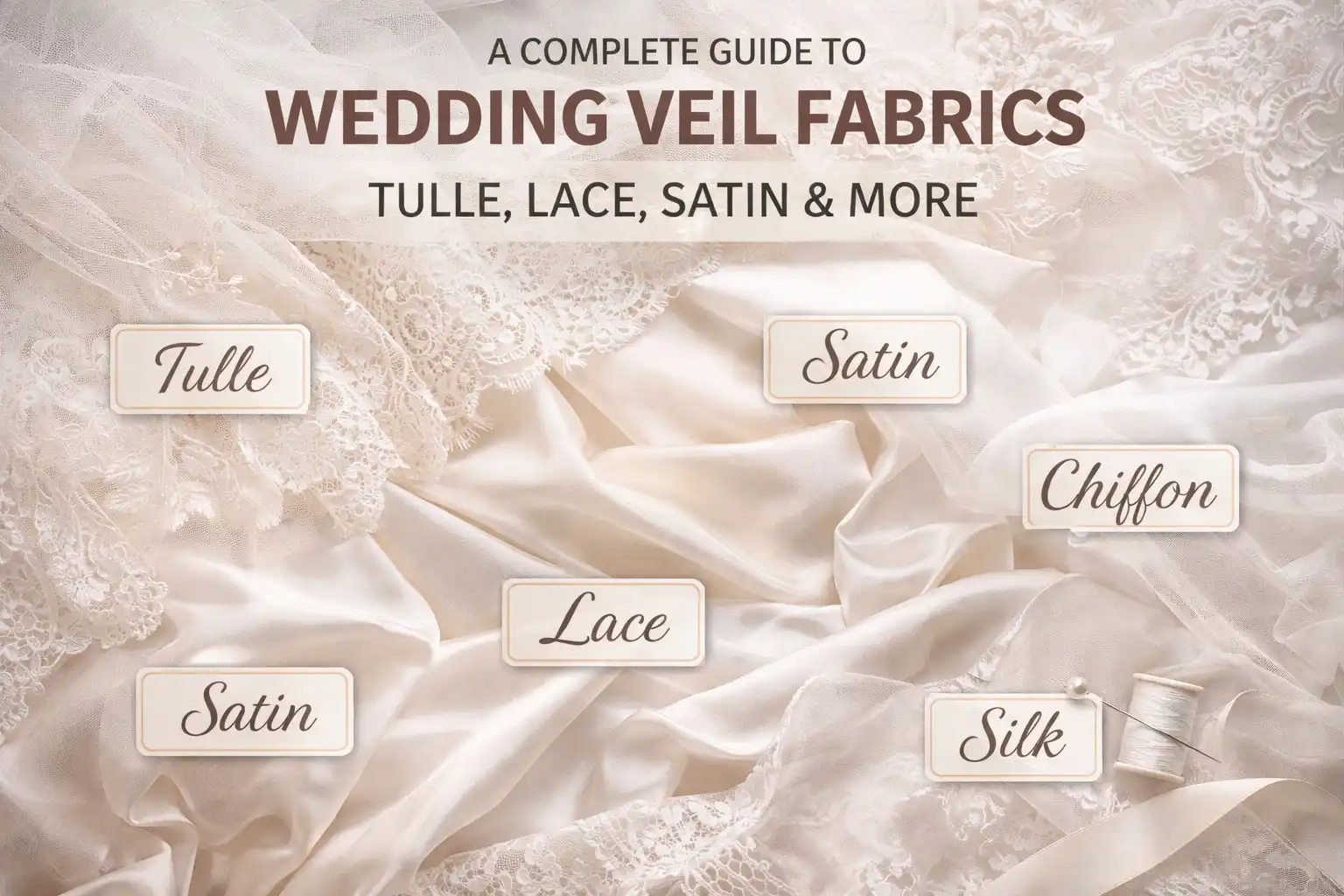
Choosing a wedding veil is more than choosing a length or deciding between a blusher and a single-tier look. The fabric itself shapes the veil’s movement, weight, texture, and overall feel. Some materials offer light, airy softness. Others hold their form with crisp structure. Understanding these differences helps brides make decisions that support the dress style, venue, comfort, and personal taste.
In this article, we’ll explore different wedding veil materials, how they behave, and what makes each one suitable for specific settings and silhouettes.
What Veil Fabric Does to Your Bridal Look
Three factors change dramatically across fabrics:
Drape: Silk tulle falls softly and follows the body, while organza holds its volume like gentle architecture.
Opacity: Chiffon softens the silhouette, whereas nylon tulle remains sheer and airy.
Movement: Some fabrics catch the air easily while others stay close to the body.
Fabric also interacts with practical details such as hairstyle support, dress fabric, seasonal conditions, and even ceremony venue. Beach weddings benefit from chiffon’s fluidity, while cathedral weddings pair well with structured satin or tulle.
Tulle: The Classic Bridal Standard
Tulle dominates the bridal market for several good reasons. It is incredibly versatile, holds light volume without feeling heavy, and can be cut into virtually any veil length or silhouette. Its net-like structure creates softness without blocking details on the dress.
Nylon Illusion Tulle
Nylon tulle, often called illusion tulle, has a slightly matte surface and fine grid pattern. It offers durability and holds volume without stiffness. Brides who want cathedral-length veils, multi-tier veils, or dramatic silhouettes gravitate toward this option because it maintains shape without weighing down the hairstyle.
Silk Tulle
Silk tulle carries luxury. It falls closer to the body, has natural sheen, and provides movement that feels organic in motion. It is typically reserved for higher-end veils due to cost and delicacy. The trade-off for elegance is that silk tulle snags easily and requires proper storage.
English Net / Italian Tulle
English and Italian net serve as a practical alternative to silk tulle. They offer a soft drape with slightly heavier hand feel and a subtle vintage character. Brides who want softness without extreme delicacy often choose this fabric for capes or chapel-length veils.
Shimmer Tulle
Shimmer versions incorporate reflective fibers that create a faint sparkle under light. They work well for gowns with sequins or beadwork, drawing the eye upward without taking attention away from corsetry or appliqués.
Lace: Romantic Texture and Detail
Lace plays both structural and decorative roles. Instead of relying on volume, lace contributes texture, pattern, and artistry. Lace veils vary significantly in weight and design.
- Chantilly Lace is lightweight and finely detailed with a soft hand feel and delicate motifs.
- Alençon Lace features raised corded edges that add dimension and drama.
- Guipure (Venice) Lace is heavier and more graphic, with bold motifs linked by bars rather than netting.
Lace often appears in edging, appliqués, or allover construction. The iconic mantilla veil showcases lace around the full perimeter and sits closer to the head, creating a Spanish-inspired profile that works beautifully for traditional and romantic settings. Lace veils are especially fitting for gowns that already incorporate lace or heritage textile elements.
Satin: Structured and Formal
Satin conveys formality, polish, and evening-wear sophistication. It is smooth to the touch, glossy on the face side, and heavier than most bridal veil materials. Satin rarely makes up the entire veil; instead, it often appears as a satin ribbon edge or wide satin border. These edges reinforce shape and create clean lines that pair naturally with satin gowns, Mikado silhouettes, or minimalist structured dresses. Satin also photographs well in low light due to its reflective surface.
Organza: Crisp and Architectural
Organza has a sheer body with a crisp finish. It holds form without appearing rigid, making it suitable for brides who want definition without bulk. Because organza carries volume, it works well for chapel and cathedral lengths. It complements structured wedding dress fabrics such as Mikado and heavy satin. Brides drawn to classic couture influences often lean toward organza for its clarity of shape and modest shine.
Chiffon: Soft, Airy, and Effortlessly Romantic
Chiffon is smooth, airy, and fluid with a gentle movement that photographs beautifully outdoors. Its semi-opaque nature softens the lines of the dress without completely hiding them. Chiffon veils typically use a single tier because layering increases visual weight. Chiffon suits bohemian, beach, and garden weddings, and pairs with delicate fabrics such as silk charmeuse, soft lace, or chiffon gowns. Brides who value comfort often appreciate chiffon’s softness against the skin.
Silk: Luxury With Natural Movement
Silk brings a level of softness and natural movement that synthetic fabrics cannot imitate. Brides often choose silk for its feel, its gentle sheen, and its organic drape.
Silk veils work especially well with silk gowns, minimalist designs, and intimate or formal ceremonies. The only limitations involve cost and durability. Silk is the most delicate material on this list, so it demands careful handling and storage.
Other Fabrics Brides May Come Across
Brides sometimes encounter additional materials, especially in handmade or couture designs:
- Point d’esprit: Features tiny woven dots for a vintage or playful look.
- Specialty nets: Offer subtle variations in texture and softness
- Illusion mesh variations: Slight changes in stiffness or openness of weave.
- Tulle alternatives: Used in fashion-forward, retro, or editorial styles.
These fabrics work well for brides who want something distinctive, understated, or historically inspired.
Matching Veil Fabric to Your Dress Material
Pairing the veil fabric with the dress material creates harmony from head to toe.
- Satin gowns: Satin-edged veils or structured organza complement the smooth body of the dress.
- Lace gowns: Lace-edged veils or Chantilly lace mantillas create a consistent look.
- Crepe gowns: Soft tulle or English net adds movement and softens the minimalist texture.
- Silk gowns: Silk tulle keeps the look consistent.
- Mikado or structured gowns: Organza or tulle with firm body reinforces the dress shape.
Matching doesn’t mean identical, but the fabrics should relate well. Texture, sheen, and weight all matter here.
Matching Veil Fabric to Your Wedding Setting
Your venue influences how a fabric behaves.
- Beach: Chiffon, silk tulle, or soft tulle move gently without becoming too heavy in humidity.
- Garden: Tulle or lace offers a romantic look that suits outdoor photography.
- Church or cathedral: Cathedral-length veils made from illusion tulle, silk tulle, or lace deliver formality.
- Elopements: Light, simple veils in soft tulle or chiffon complement minimal gowns.
- Vintage settings: Lace, English net, or point d’esprit support classic or historic themes.
- Modern venues: Organza or clean-edged tulle pairs well with sleek silhouettes.
FAQs
Are tulle veils uncomfortable to wear for long periods?
Most brides find tulle veils comfortable because the material is lightweight and breathable. Discomfort usually comes from hairstyle tension, comb placement, or veil weight rather than the fabric itself. Silk tulle is the softest option against the skin, while nylon tulle offers durability and structure.
Can I mix different fabrics in a single veil design?
Yes. Designers often combine tulle with lace appliqués, satin ribbon edging, or embroidered trims to create contrast or add detail. Mixing fabrics works best when the dress fabric supports the same level of refinement. Heavy lace on ultra-light chiffon may feel visually uneven, so balance matters.
Do certain veil fabrics photograph better than others?
Photography favors fabrics that show movement and transparency. Silk tulle, chiffon, and English net work well for motion shots. Satin and lace showcase detail and edging during portraits. Brides should also consider lighting conditions, as shimmer tulle reflects artificial light more strongly than matte tulle.
Are silk veils worth the higher cost?
Silk veils appeal to brides seeking natural drape, softness, and quiet sheen. The cost reflects both fiber quality and limited production. Brides who value luxury textiles or couture gowns often justify the investment. Brides primarily focused on durability or budget may prefer nylon tulle or English net.
What veil fabrics are best for windy outdoor ceremonies?
Chiffon and silk tulle tend to cling closer to the body in wind. Traditional nylon tulle lifts more easily, which can make it unpredictable during beach or cliffside ceremonies. Lace mantillas are also stable because the fabric carries a bit more weight around the perimeter.
