


 CSIRO/Cindy Bessey
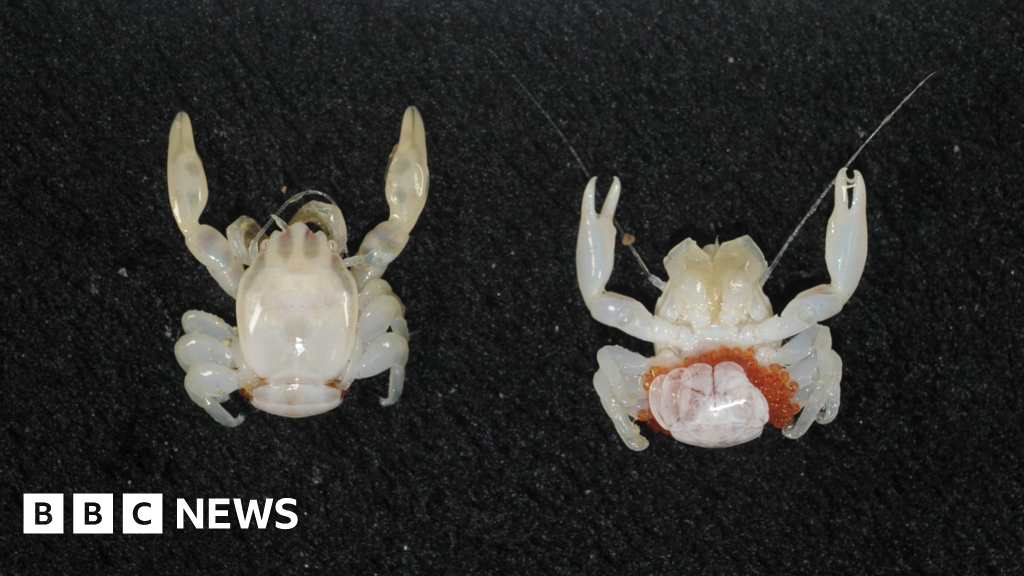
A semi-transparent crab in regards to the measurement of an almond and a tiny, glowing lantern shark are amongst two new species found by Australian scientists exploring the deep sea.
In late 2022, scientists from Australia’s science company CSIRO launched into a analysis voyage within the Gascoyne Marine Park, about 20km (12 miles) off the coast of Western Australia.
Australia is without doubt one of the world’s largest biodiversity hotspots, house to greater than one million completely different species, lots of which aren’t discovered wherever else on earth.
However – like a lot of the globe – giant swathes of its water stay unexplored, and the animal and flowers inside them unknown to science.
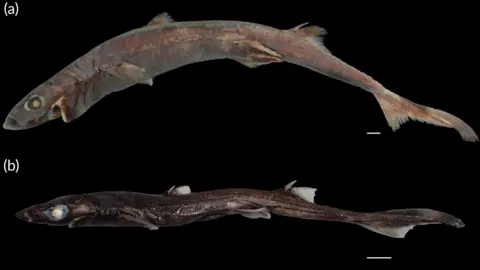
Among the many tons of of specimens collected in the course of the 2022 voyage was the newly described West Australian Lantern Shark. Rising as much as 40cm, it has giant eyes and a glowing stomach, and was discovered greater than 600m beneath the ocean’s floor.
“Lantern sharks are bioluminescent, with gentle produced by photophores positioned on their stomach and flanks, which is the place their frequent title comes from,” Dr Will White, a fish scientist, mentioned.
 CSIRO
CSIROAdditionally they found a brand new sort of porcelain crab, about 1.5cm in size and located about 122m beneath sea stage. They use hairs to catch meals, as a substitute of their claws.
“Porcelain crabs are often known as filter feeders, feeding on plankton by utilizing modified mouthparts with lengthy hairs to brush the water for small items of meals akin to plankton, reasonably than the everyday crab technique of grabbing and pinching meals with their claws,” mentioned Dr Andrew Hosie, curator of aquatic zoology from the Western Australian Museum.
About 20 new species have been unearthed because of the voyage up to now, together with the Carnavon Flapjack Octopus, a rusty pink creature round 4cm large.
Researchers estimate about 600 extra are but to be described and named, as it may well take years for scientists to assemble the data to show they’re distinctive.
