


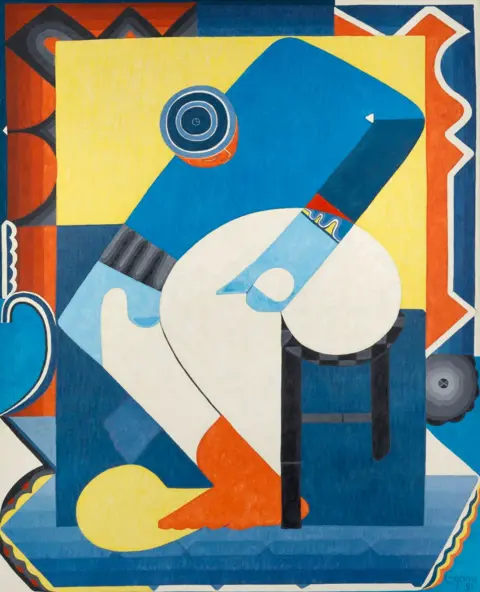
 The property of Uzo Egonu
That is “one of many biggest issues to have occurred, not solely to my artwork, however to Nigerian art work”, 93-year-old painter and sculptor Bruce Onobrakpeya says as he seems to be across the rooms on the Tate Trendy, one among London’s premier galleries.
“The gathering is incredible and it brings again a variety of recollections going again 50, 60, 70 years.”
Onobrakpeya is amongst greater than 50 artists whose work is happening present on the gallery on the south financial institution of the Thames as a part of Nigerian Modernism, an formidable presentation that spans a interval from 1910 to the Nineteen Nineties.
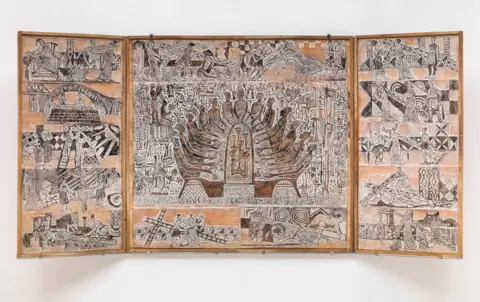 Tate
Tate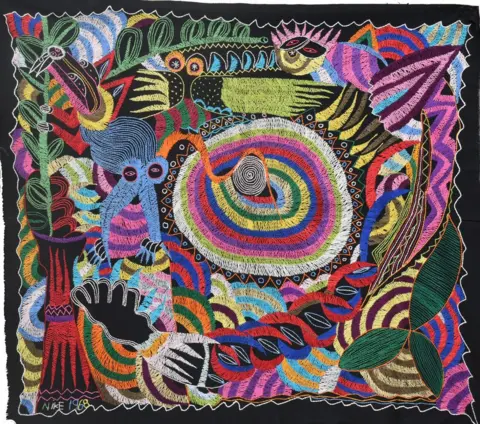 Nike Davies-Okundaye / Kavita Chellaram
To Onobrakpeya, affectionately referred to as Baba Bruce inside artwork circles, Nigerian Modernism is “a switch of the outdated concepts, outdated objects, outdated applied sciences, outdated thought into a unique, fashionable time”.
It’s “projecting the current, and displaying the best way in direction of the longer term”.
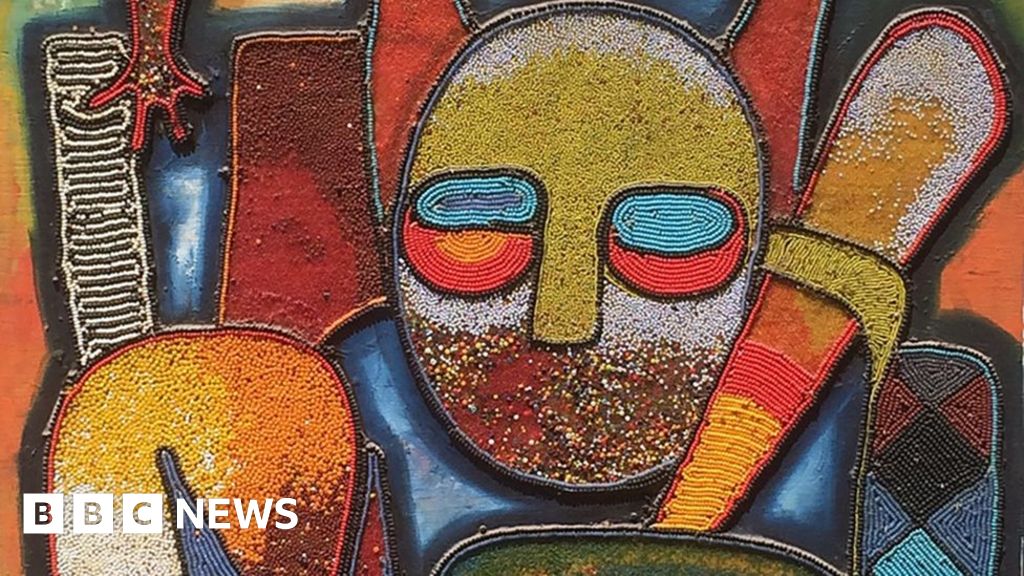
Strolling via the Tate’s lofty rooms, items that mix indigenous Nigerian strategies like bronze casting, mural portray and wooden carving, with extra European types are all on present.
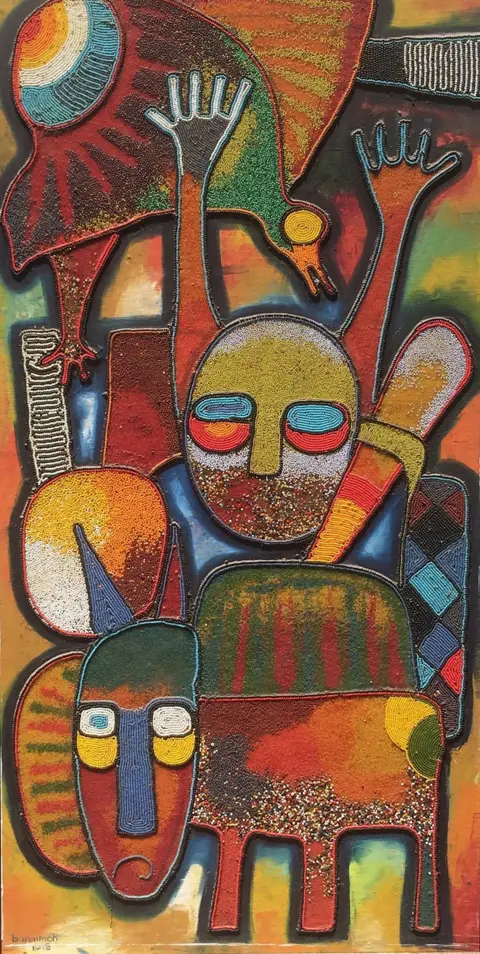 Jimoh Buraimoh / Kavita Chellaram
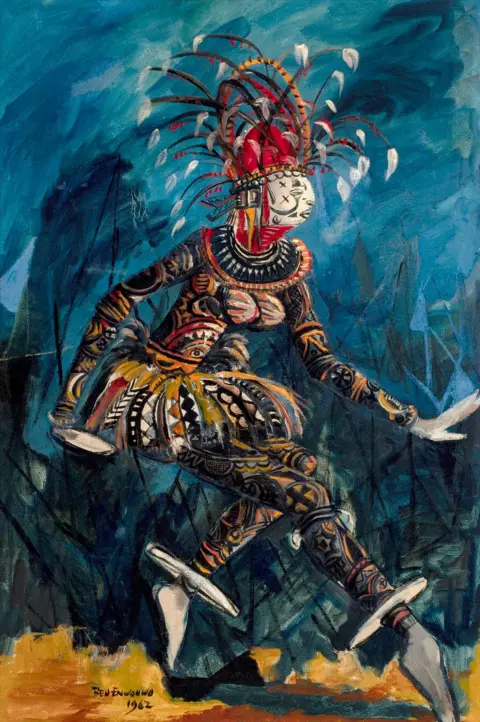 Ben Enwonwu Basis
There are naturalistic work documenting real-life occasions and extra summary works, like these of visible artist, drummer and actor Muraina Oyelami.
Oyelami is happy to be a part of such a significant exhibition, even when the label “modernist” means little or no to him.
“I made artworks, work. If the author or the critic now comes and says: ‘That is modernism’ or no matter ‘ism'” – that is his or her phrases of reference,” he says.
“If that’s what they name it, why not? I do not care.”
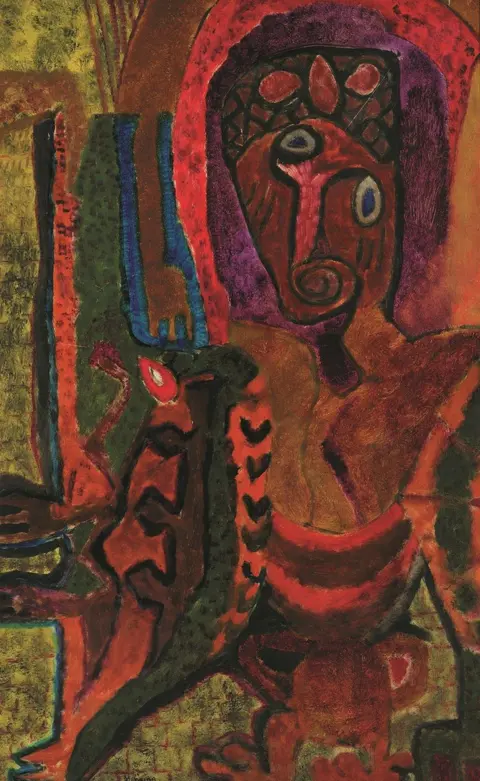 Muraina Oyelami
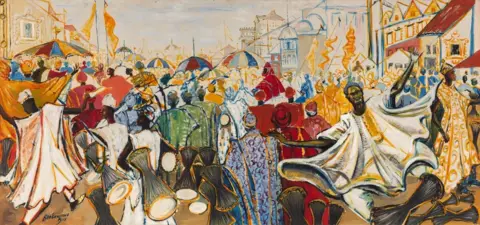 Ben Enwonwu Basis
For Oyelami, the Sixties and 70s had been an “thrilling time” to be an artist in Nigeria. It was additionally a turbulent time – the Tate’s assortment tracks the nation’s journey from a British colony, to a fledging, impartial nation, to the setting of a grisly civil warfare.
The Biafran war – which lasted from 1967 to 1970 – is mirrored by artists from the Nsukka Artwork Faculty, an influential artwork division and motion that was based by college students and professors on the College of Nigeria.
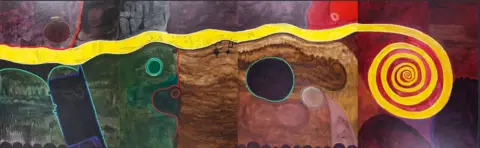 Obiora Udechukwu
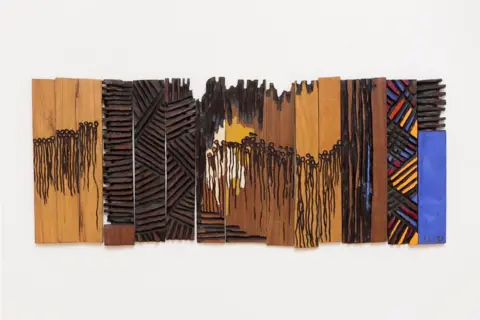 El Anatsui / Tate
It’s one among many instrumental artwork collectives explored within the exhibition.
“It isn’t nearly the best way during which artists are engaged on their particular person creative initiatives – you get the sense that the majority the artists on this exhibition are guided by a precept of collectivity,” notes Osei Bonsu, the exhibition’s curator.
Bonsu has introduced collectively a set of unbelievable breadth – from watercolours to images to miniscule thorn carvings to political cartoons. Artists hail from numerous ethnic teams and Nigeria’s big diaspora will get a look-in as properly.
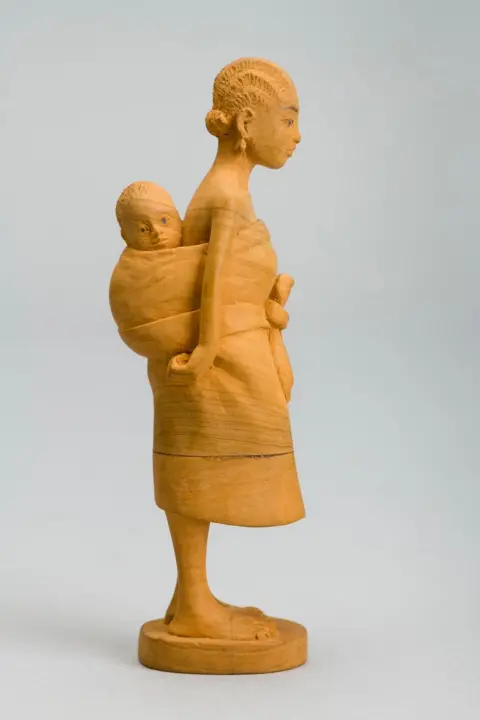 Justus D. Akeredolu
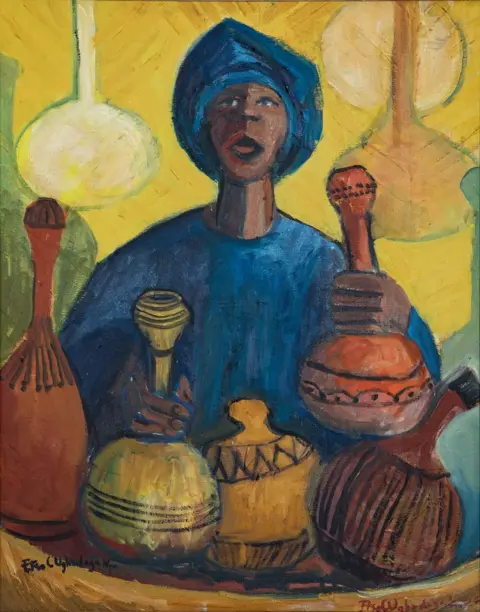 Clara Etso Ugbodaga-Ngu
For all their variations, all of the creatives represented have at the very least one factor in frequent, Bonsu says – “fashioning radical visions of what fashionable artwork might be”.
Nigerian Modernism runs on the Tate Trendy from Wednesday till 10 Might subsequent 12 months, and hopes to light up a motion that has lengthy been underrepresented on the worldwide stage.
“It comes with a message that we are able to take dwelling,” Onobrakpeya says.
“It provides us hope, it provides us energy, and we’ll work tougher and we’ll produce one thing even better than this.”
Extra BBC tales on African artwork:
 Getty Pictures/BBC